How to Choose the Right Crusher for Your Application
omnimech Team
omnimech Team
Introduction
Choosing the right crusher for your application is crucial for achieving optimal performance and cost efficiency. With dozens of crusher models on the market—each designed for specific material characteristics and production goals—making the wrong selection can lead to excessive wear, poor product quality, unplanned downtime, and significantly higher operating costs.
This guide walks you through the key factors you need to evaluate, compares the major crusher types in detail, and provides practical recommendations based on real-world applications across mining, quarrying, and construction industries.
Key Factors to Consider
1. Material Properties
Understanding your feed material is the foundation of crusher selection. Evaluate these critical properties:
- Hardness (Mohs scale): Materials rated 1–3 (limestone, gypsum) are soft; 4–6 (iron ore, copper ore) are medium; 7–10 (granite, basalt, quartz) are hard. Harder materials require crushers with higher crushing force and more robust wear parts.
- Abrasiveness: Highly abrasive materials (granite, basalt) accelerate wear on liners and jaws. Choose crushers with high-manganese or chrome-molybdenum wear parts and consider impact crushers only if the material is moderately abrasive.
- Moisture content: Materials with >5% moisture tend to stick and clog. Jaw crushers handle moist materials better than cone crushers, which are prone to packing in the crushing chamber.
- Feed size: The maximum feed size must not exceed the crusher’s feed opening. As a rule, keep the maximum feed size at 80–85% of the crusher’s gape (feed opening width).
- Stickiness: Clay-rich or sticky materials require special consideration—jaw crushers with flat dies or roll crushers may be more appropriate than cone crushers.
2. Required Production Capacity
Capacity requirements directly determine crusher size:
- Tons per hour (TPH): Calculate your required throughput at the desired product size, not the maximum theoretical capacity. Real-world capacity is typically 60–80% of nominal capacity depending on feed gradation and material properties.
- Operating hours per day: A crusher running 16 hours/day needs different specifications than one running 8 hours. Factor in planned maintenance windows.
- Seasonal variations: Some quarries operate at reduced capacity during rainy seasons. Size your crusher for peak demand to avoid bottlenecks.
- Future expansion: If you anticipate growth, select a crusher with 20–30% spare capacity rather than running at maximum load continuously.
3. Desired Product Size and Shape
- Final product specifications: Aggregate for concrete typically requires 0–5mm, 5–10mm, 10–20mm, and 20–40mm fractions. Base course material may need 0–31.5mm.
- Shape requirements: Cubical particles are preferred for concrete and asphalt. Impact crushers and cone crushers with proper chamber profiles produce better particle shape than jaw crushers.
- Size distribution (gradation): Tight gradation control requires closed-circuit crushing with a vibrating screen returning oversize material to the crusher.
4. Crushing Stage
- Primary crushing: Reduces run-of-mine material from 300–1200mm to 100–300mm. Jaw crushers and gyratory crushers are the primary choices.
- Secondary crushing: Further reduces material from 100–300mm to 20–80mm. Cone crushers and impact crushers excel here.
- Tertiary/Quaternary crushing: Produces final product sizes below 20mm. Short-head cone crushers, VSI crushers, and fine impact crushers are used.
- Sand making: For manufactured sand (0–5mm), VSI crushers with rock-on-rock crushing chambers deliver the best particle shape.
Crusher Types: Detailed Comparison
Jaw Crushers
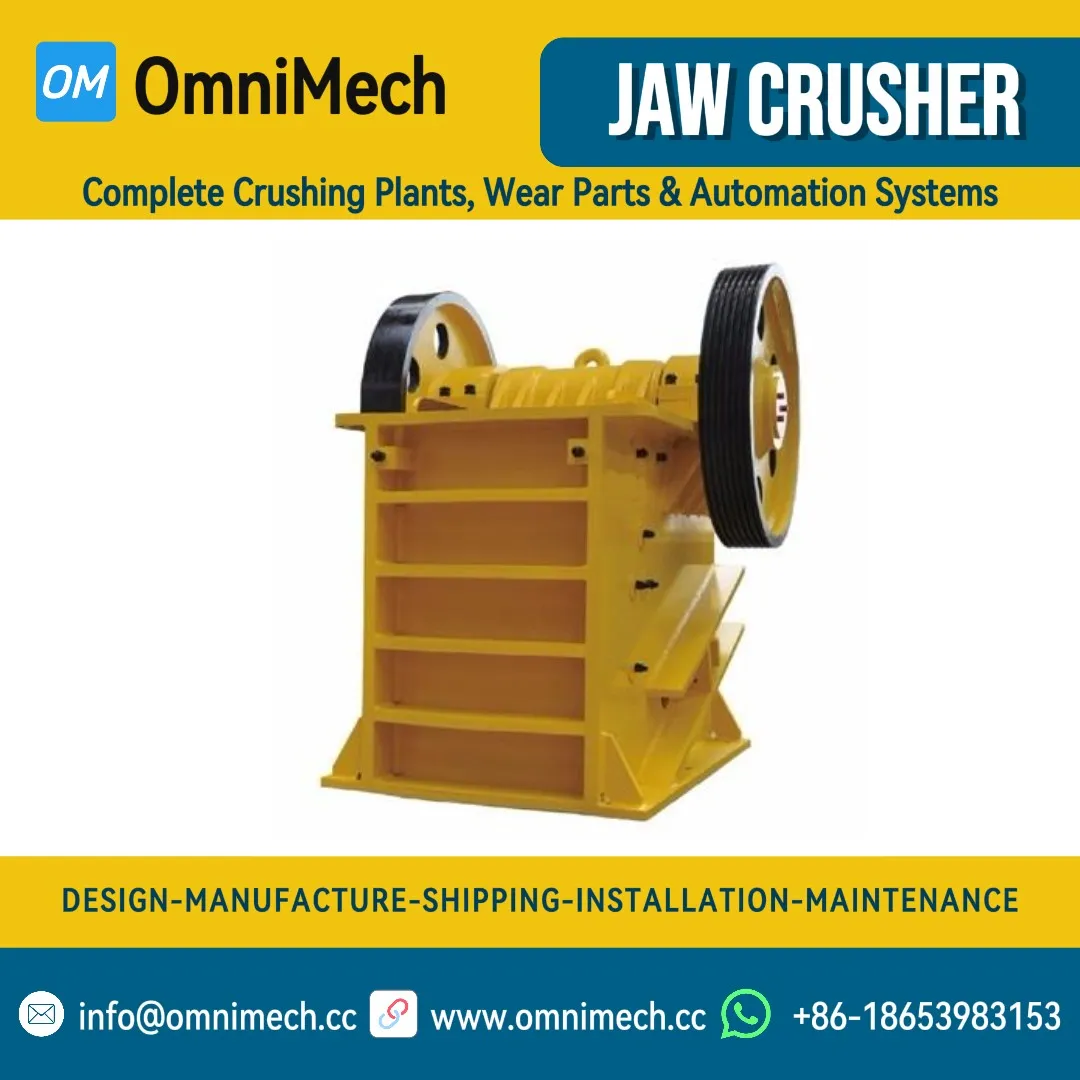
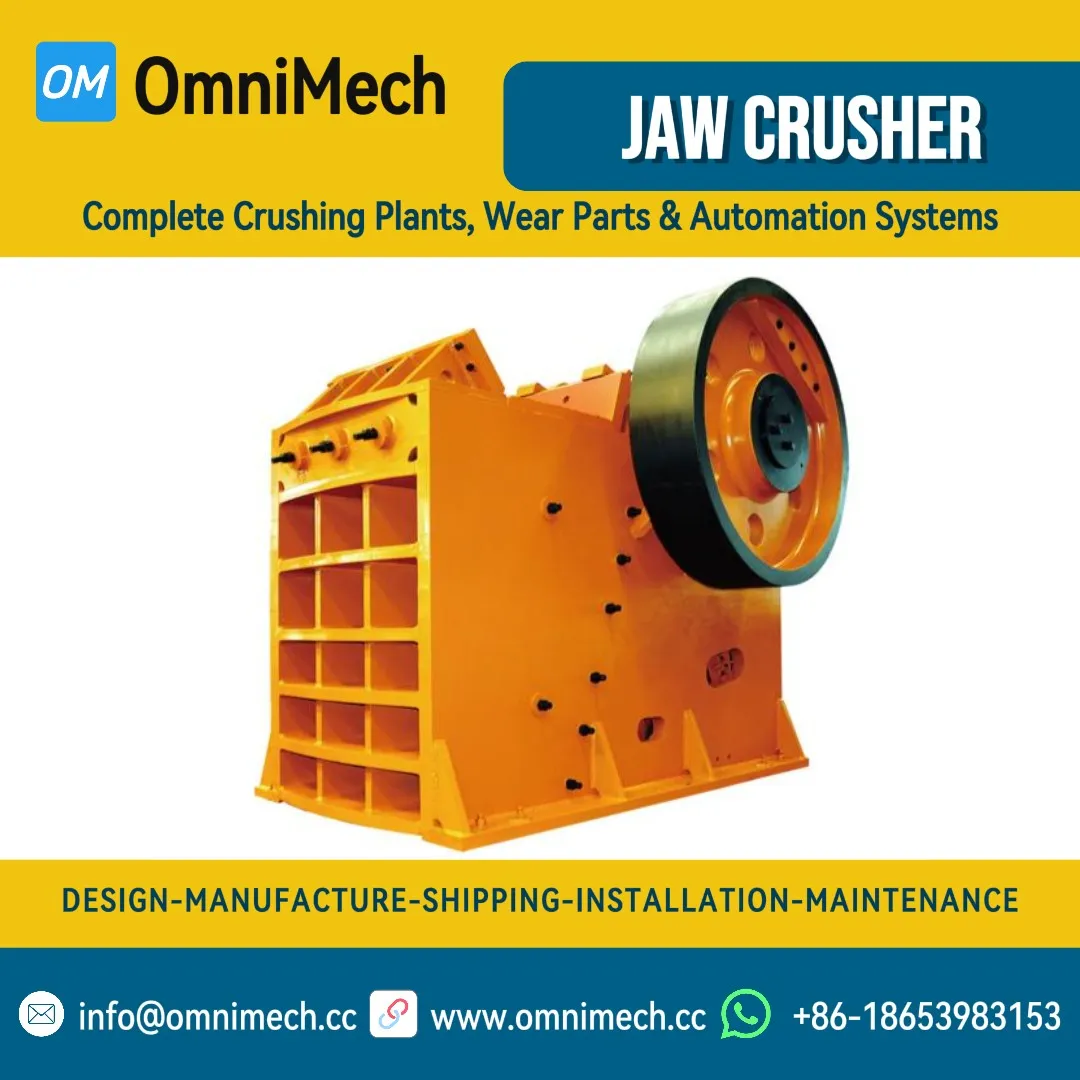
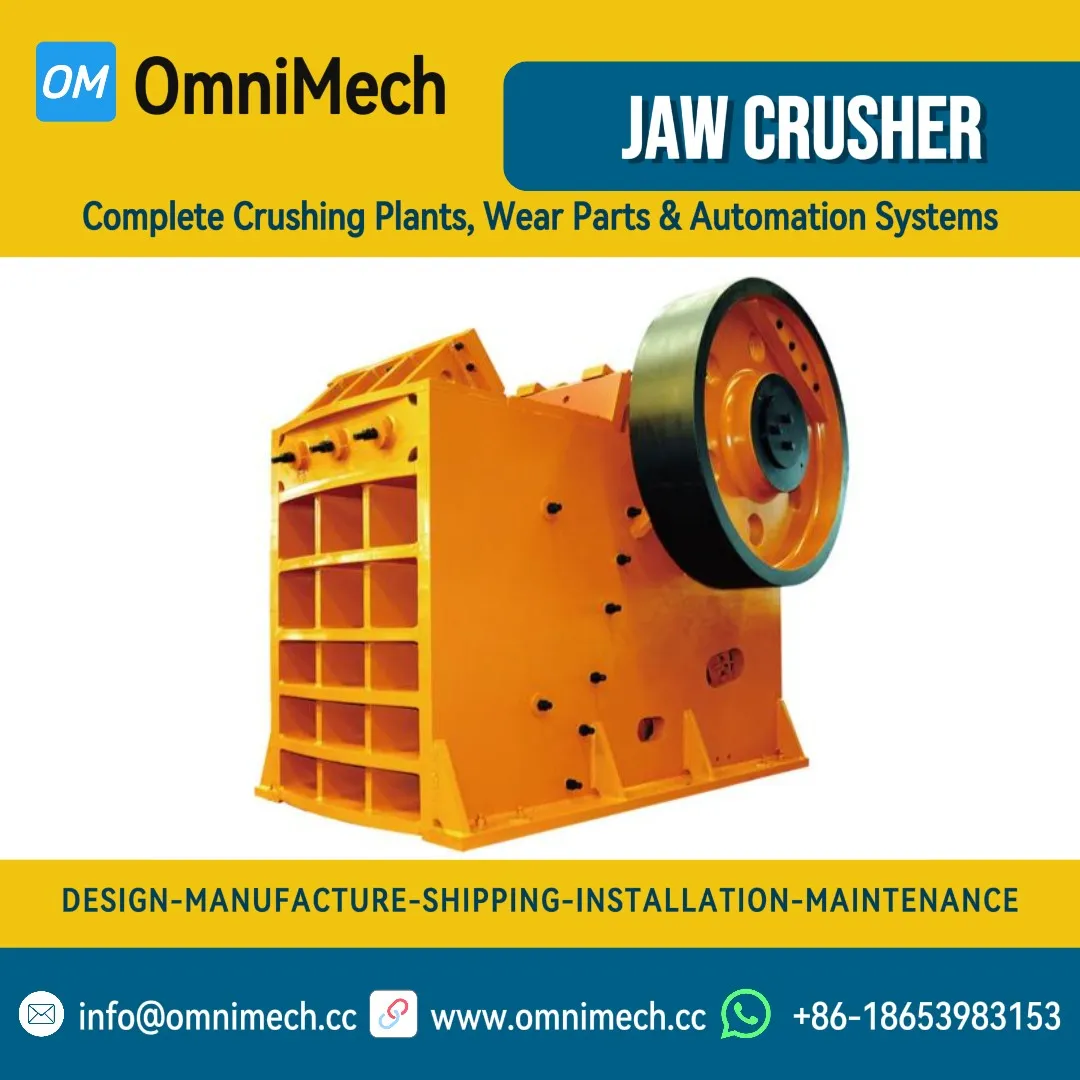
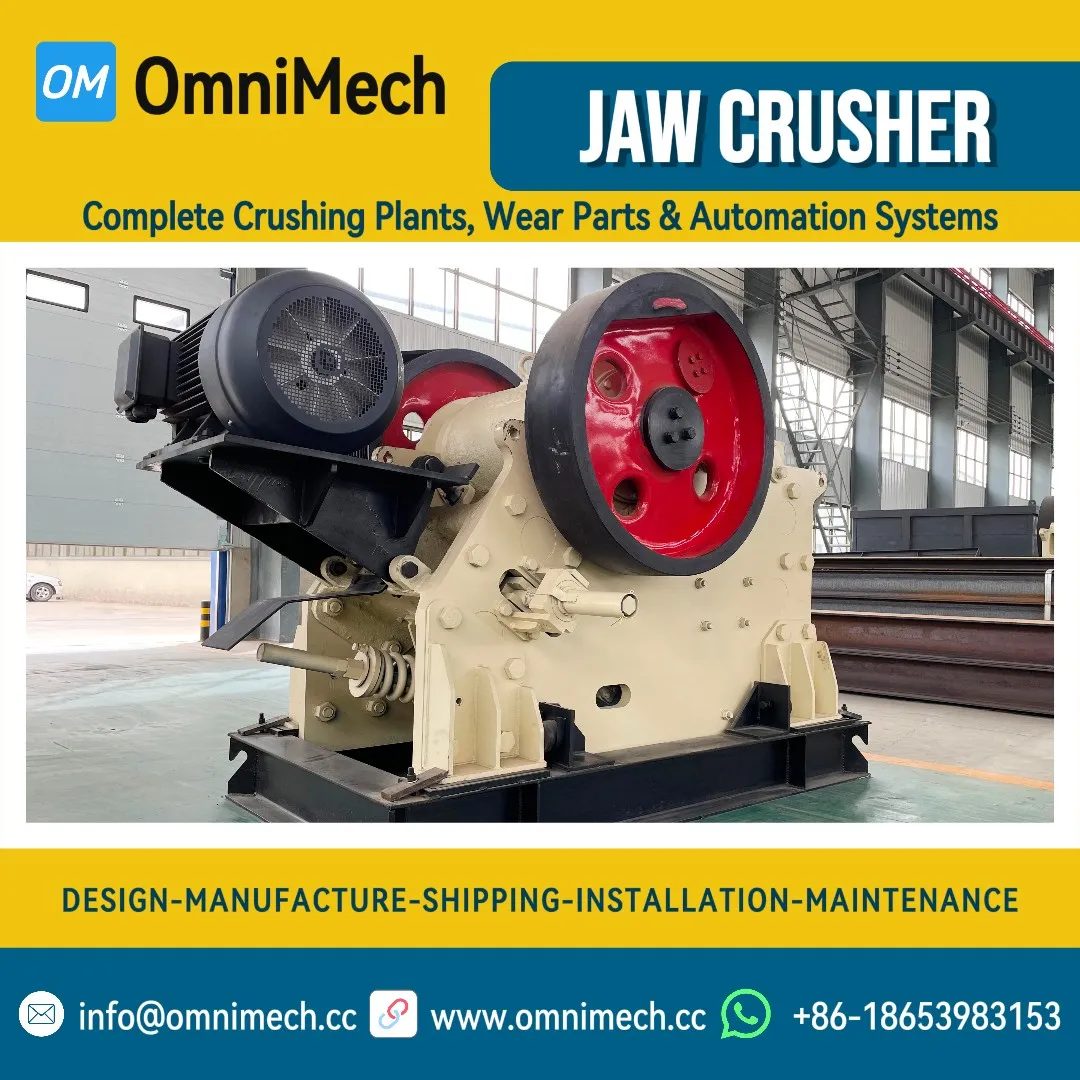
Jaw crushers use compressive force between a fixed jaw and a swinging jaw to break material. They are the workhorse of primary crushing.
Best for: Primary crushing of hard, abrasive materials (granite, basalt, iron ore)
Strengths:
- Handles large feed sizes (up to 1200mm with PE 1200×1500)
- Simple structure with low maintenance requirements
- High reduction ratio (3:1 to 6:1)
- Lower capital cost compared to gyratory crushers
- Handles moist and sticky materials well
- Easy liner replacement
Limitations:
- Product shape is flaky and elongated (not ideal for concrete aggregate)
- Limited capacity compared to gyratory crushers for the same feed size
- Higher energy consumption per ton than cone crushers
- Choke feeding required for optimal performance
Common models and applications:
- PE 250×400 (5–20 TPH): Small quarries, laboratory crushing
- PE 600×900 (50–160 TPH): Medium-scale primary crushing
- PE 900×1200 (140–320 TPH): Large quarry primary crushing
- PE 1200×1500 (80–800 TPH): Mining operations, high-capacity plants
Cone Crushers
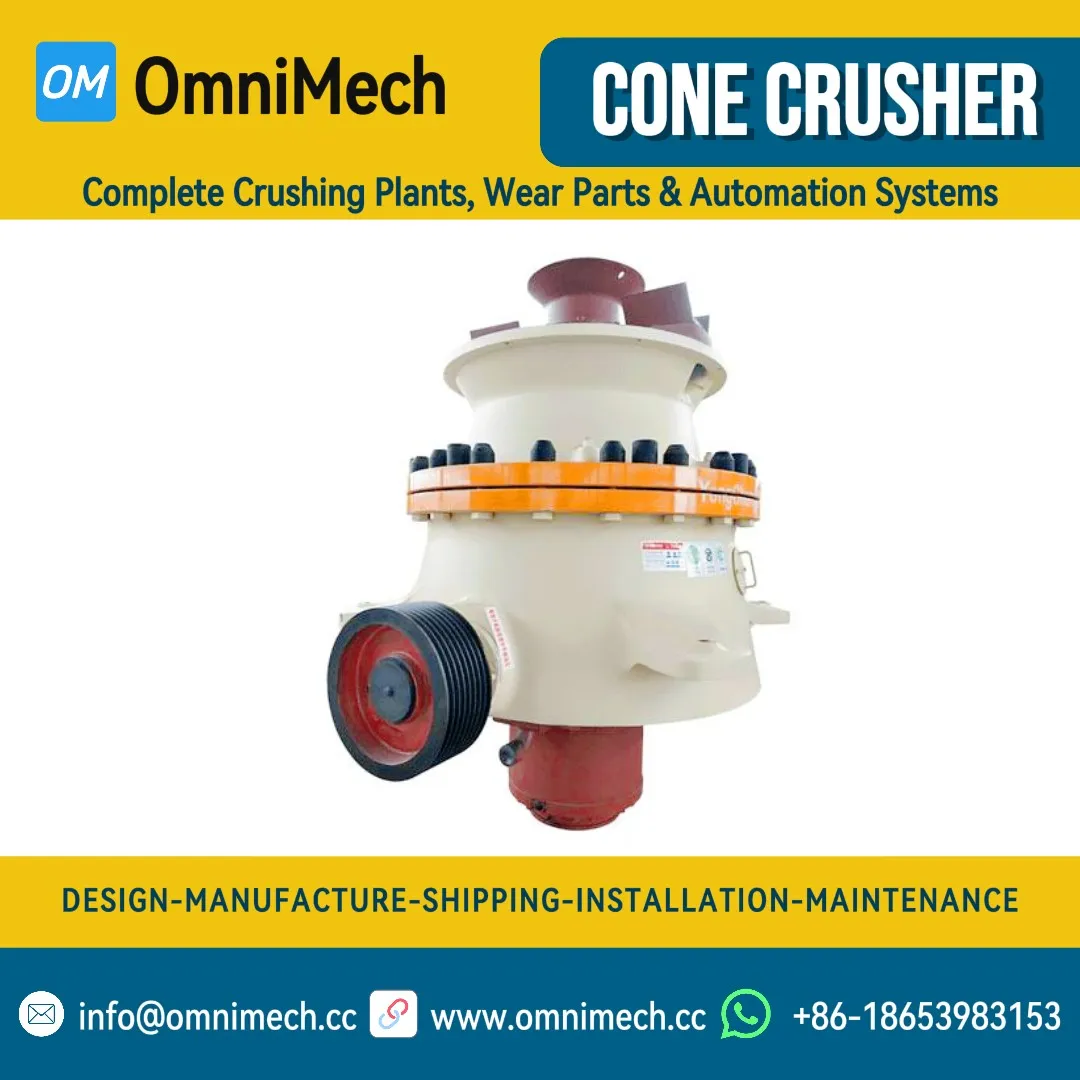
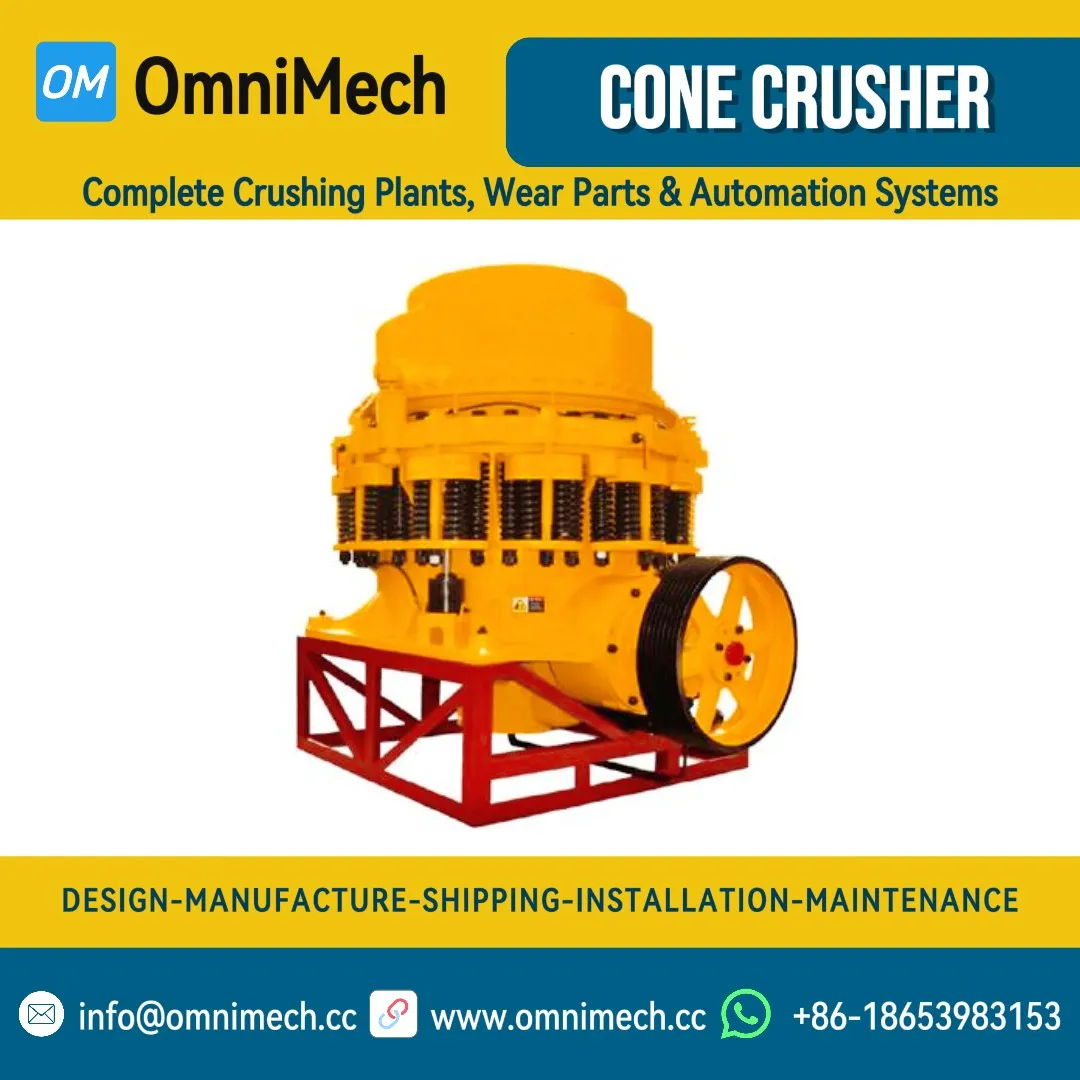
Cone crushers use a rotating mantle inside a concave bowl to compress and break material. They are the standard for secondary and tertiary crushing.
Best for: Secondary and tertiary crushing of medium-hard to hard materials
Strengths:
- Excellent particle shape (cubic, well-graded)
- High capacity for a given physical size
- Hydraulic adjustment for quick setting changes
- Tramp iron protection via hydraulic relief
- Multiple chamber profiles (coarse, medium, fine) for different applications
- Lower wear cost per ton compared to impact crushers for hard materials
Limitations:
- Cannot handle large feed sizes (max feed typically <300mm)
- Sensitive to moisture and sticky materials (choking risk)
- Higher capital cost than jaw crushers
- Requires consistent, choke-fed operation for best results
Key selection criteria:
- Single-cylinder (Hydraulic): Simpler design, lower cost, good for general secondary crushing. Models like PYB/PYZ/PYD 900–2200 cover 15–700+ TPH.
- Multi-cylinder (High-performance): Higher capacity, better product shape, ideal for tight specification aggregate. Models like HPC220–HPC800 cover 90–1200+ TPH.
Impact Crushers
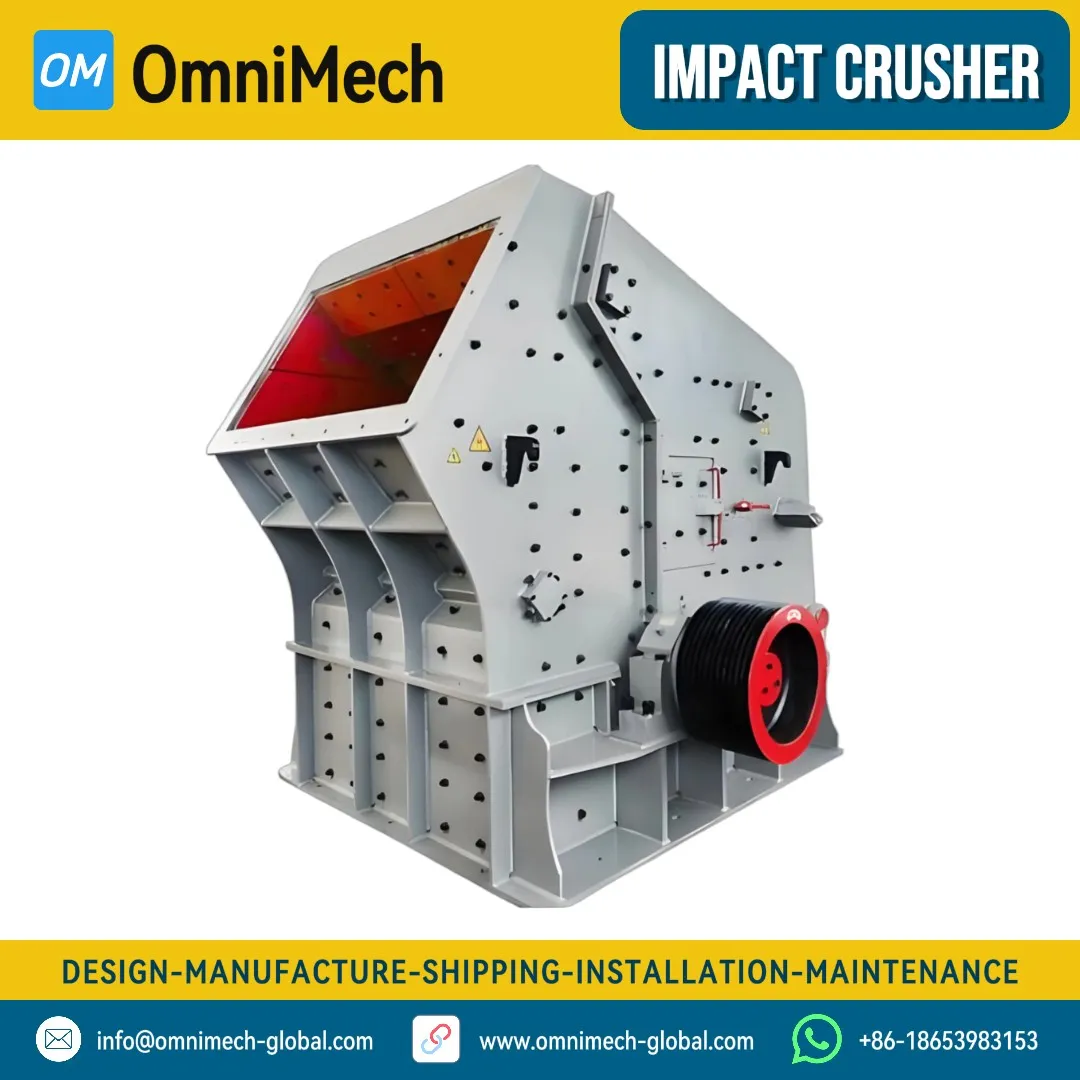
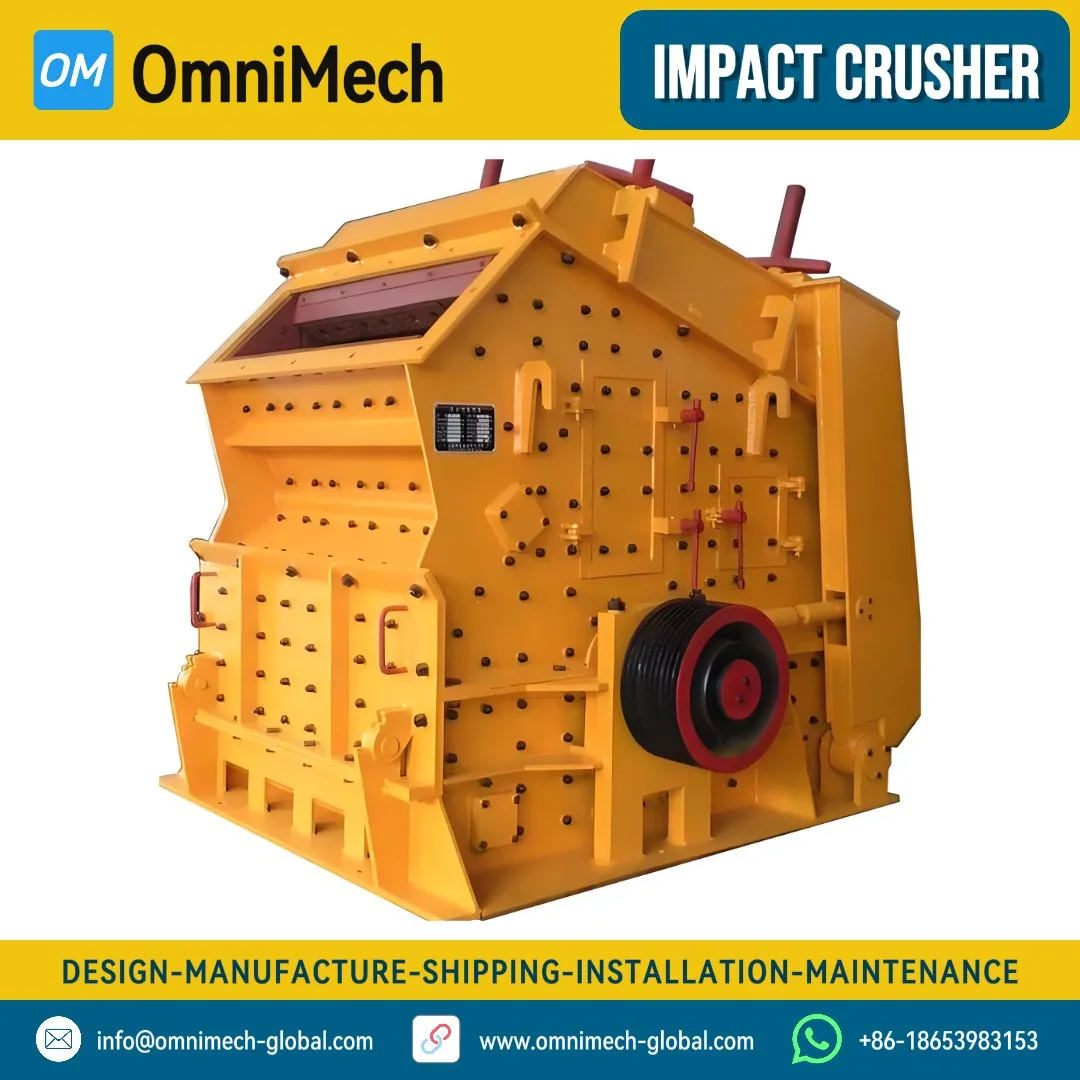
Impact crushers use high-speed rotors with blow bars to strike material against impact plates. They excel at producing well-shaped aggregate.
Best for: Secondary/tertiary crushing of soft to medium-hard, low-abrasion materials (limestone, concrete recycling)
Strengths:
- Excellent cubical particle shape (best among all crusher types)
- High reduction ratio (up to 15:1 in some configurations)
- Lower energy consumption for soft materials
- Good for recycling and demolition waste
- Simple maintenance with accessible blow bar replacement
Limitations:
- Very high wear rate on blow bars and impact plates with abrasive materials
- Not suitable for hard, abrasive rocks (granite, basalt)
- Higher operating cost per ton for abrasive applications
- Sensitive to uncrushable tramp iron (can cause catastrophic damage)
When to choose impact over cone:
- Material Mohs hardness ≤ 5 (limestone, dolomite, recycled concrete)
- Product shape is the top priority
- Feed material is relatively clean (low tramp iron risk)
Hammer Crushers
Hammer crushers use rotating hammers to strike and shatter material against breaker plates. They are a cost-effective option for specific applications.
Best for: Brittle, medium-hard materials with low abrasiveness (coal, limestone, gypsum)
Strengths:
- Simple, compact design
- Low capital cost
- High reduction ratio in a single stage
- Good for soft, friable materials
Limitations:
- High wear rate with abrasive materials
- Produces more fines than other crusher types
- Hammers require frequent replacement
- Not suitable for hard, abrasive rock
VSI Crushers (Sand Making Machines)
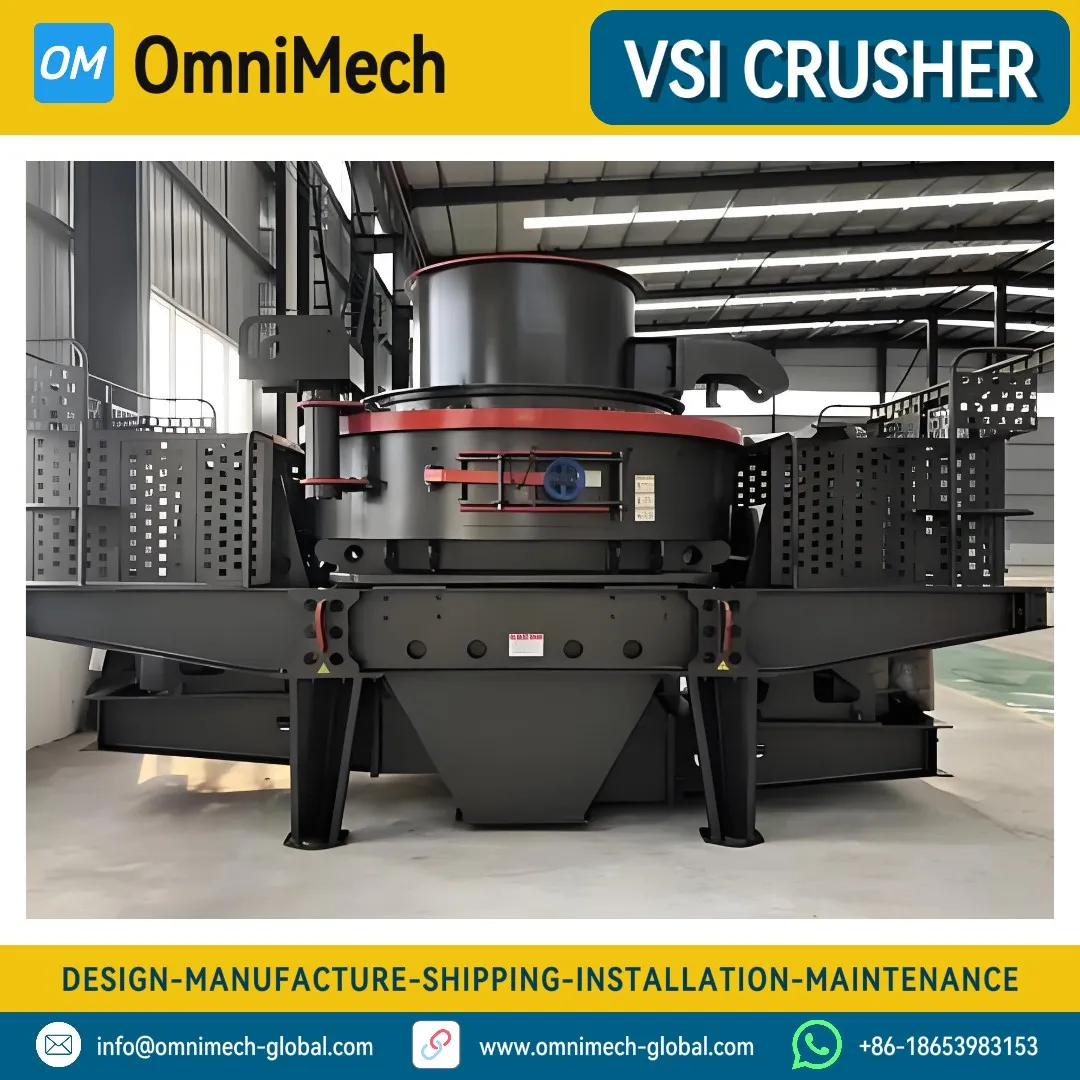
VSI crushers use a high-speed rotor to accelerate material against a hardened anvils or rock bed (rock-on-rock crushing).
Best for: Tertiary/quaternary crushing and manufactured sand production
Strengths:
- Produces the best particle shape for manufactured sand
- Low wear cost in rock-on-rock configuration
- Adjustable for different product gradations
- Excellent for producing 0–5mm sand with good gradation
Limitations:
- Limited to relatively small feed sizes (<50mm typically)
- Higher energy consumption per ton than cone crushers
- Requires consistent feed rate for optimal performance
Practical Selection Examples
Example 1: Granite Quarry (200 TPH, 0–20mm aggregate)
Recommended configuration:
- Primary: PE 750×1060 jaw crusher (feed size ≤630mm)
- Secondary: PYB1750 cone crusher (coarse chamber)
- Tertiary: PYZ1750 cone crusher (medium chamber) + vibrating screen in closed circuit
Why: Granite is hard and abrasive (Mohs 6–7). Jaw crusher handles primary reduction economically. Cone crushers in secondary/tertiary stages provide good shape with acceptable wear costs. Impact crushers would have excessive wear.
Example 2: Limestone Quarry (500 TPH, 0–5mm + 5–10mm + 10–20mm)
Recommended configuration:
- Primary: PE 900×1200 jaw crusher
- Secondary: PF1320 impact crusher (excellent shape for limestone)
- Tertiary: VSI8500 sand maker for 0–5mm fraction
Why: Limestone is soft (Mohs 3–4) and low-abrasion. Impact crusher delivers superior particle shape at lower operating cost than cone crusher for this material. VSI produces high-quality manufactured sand.
Example 3: River Pebble Sand Plant (100 TPH, 0–5mm sand)
Recommended configuration:
- Primary: PE 600×900 jaw crusher (for oversize pebbles >100mm)
- Secondary/Tertiary: VSI8500 sand maker (rock-on-rock) + fine vibrating screen
Why: River pebbles are hard and rounded. VSI rock-on-rock crushing produces excellent sand shape with minimal wear. The jaw crusher handles any oversized material.
Cost Considerations
When selecting a crusher, consider the Total Cost of Ownership (TCO), not just the purchase price:
| Cost Factor | Jaw Crusher | Cone Crusher | Impact Crusher |
|---|---|---|---|
| Capital cost | Low | Medium-High | Medium |
| Wear parts cost/ton (hard rock) | Low | Low-Medium | High |
| Wear parts cost/ton (soft rock) | Low | Medium | Low |
| Energy cost/ton | Medium | Low | Medium |
| Maintenance labor | Low | Medium | Medium |
Common Mistakes to Avoid
- Undersizing the crusher: Running at maximum capacity continuously leads to accelerated wear and frequent breakdowns. Always include 20–30% capacity margin.
- Ignoring material abrasiveness: Using an impact crusher on granite will result in blow bar changes every few days instead of months.
- Choosing based on price alone: A cheaper crusher with higher wear costs will cost more over 3–5 years than a more expensive but better-suited model.
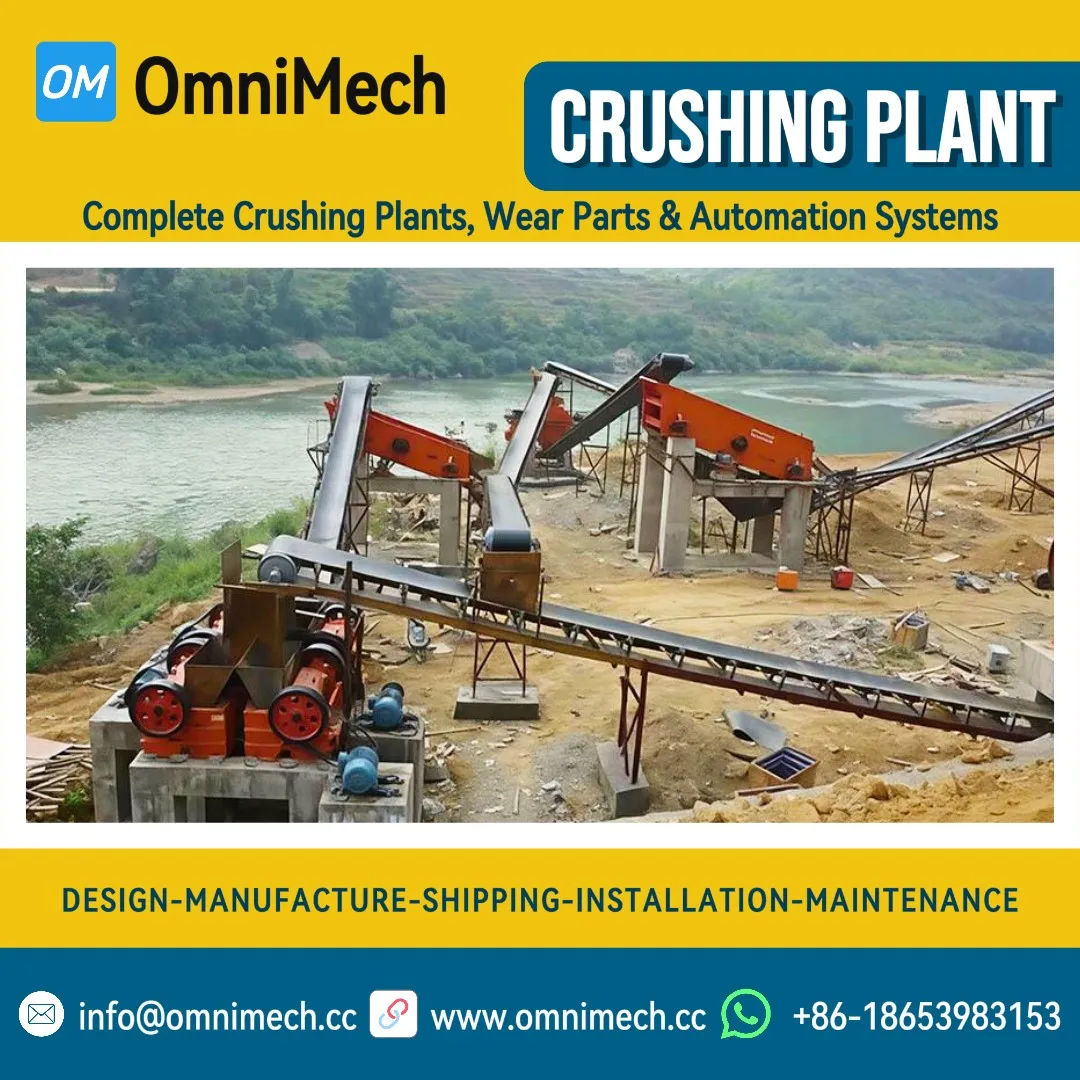
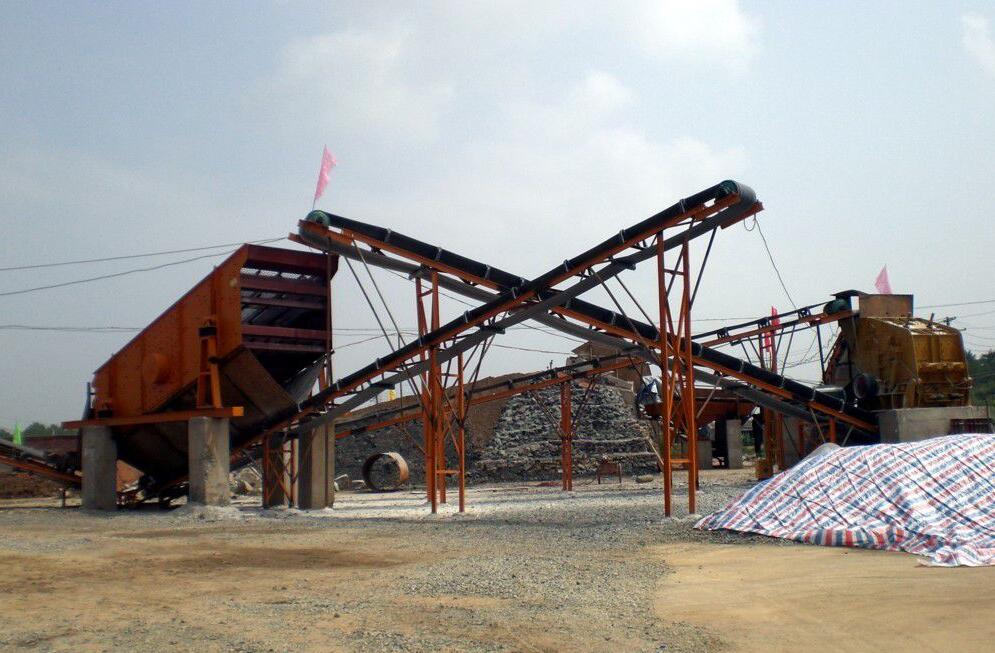
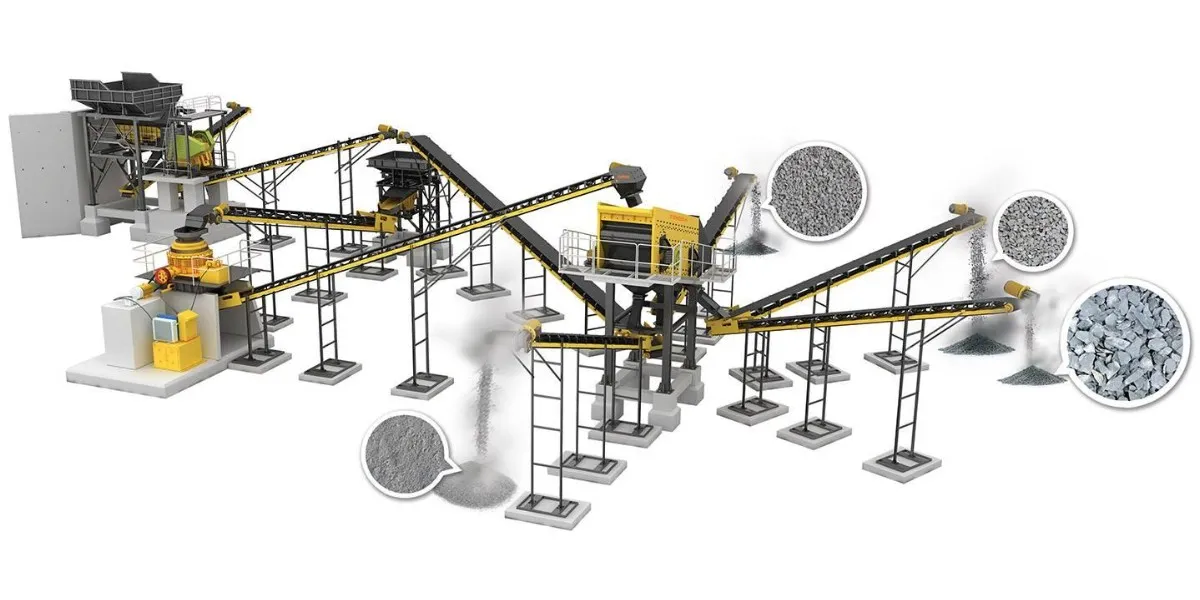
- Not considering the full crushing circuit: A great primary crusher paired with an undersized secondary crusher creates a bottleneck. Design the circuit holistically.
- Neglecting feed preparation: Inadequate vibrating feeder capacity or poor scalping (removing fines before the crusher) reduces effective crusher capacity by 15–30%.
Conclusion
Selecting the right crusher requires a systematic evaluation of material properties, capacity requirements, product specifications, and total cost of ownership. There is no universal “best” crusher—the optimal choice depends entirely on your specific application.
At OmniMech, we help customers select the right crushing equipment through detailed application analysis and decades of field experience. Contact our technical team for personalized recommendations tailored to your operation.