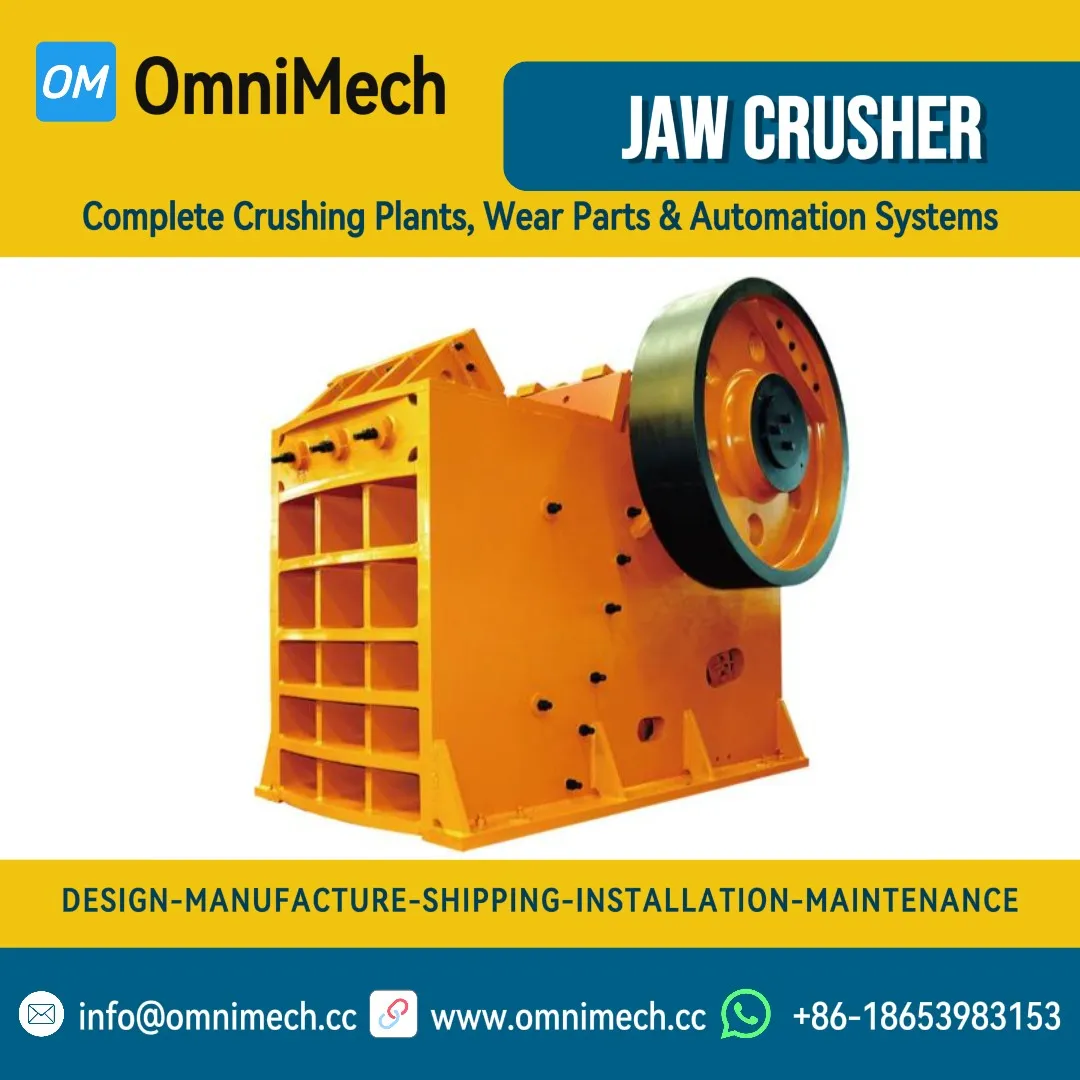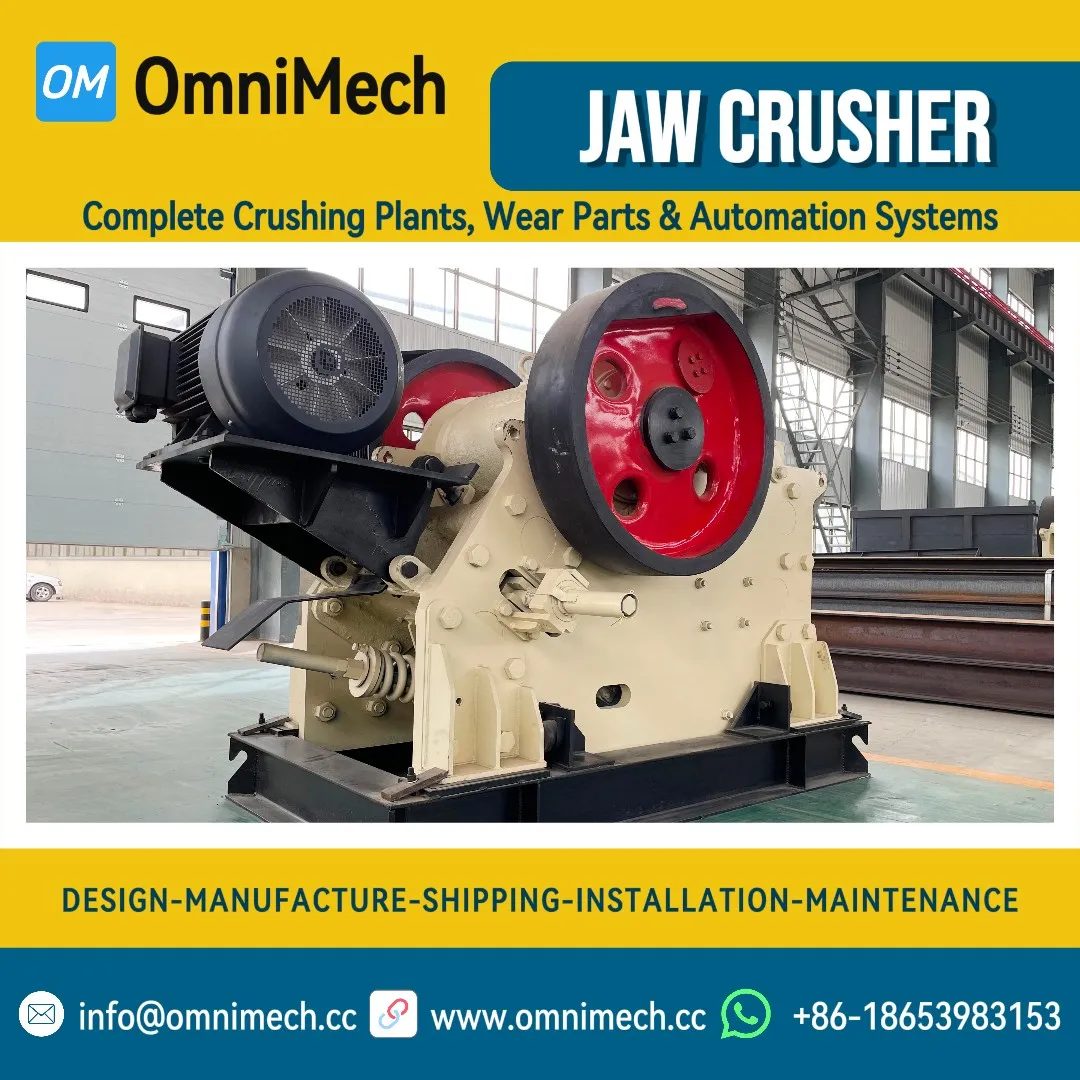
10 Essential Maintenance Tips for Jaw Crushers
omnimech Team
omnimech Team
Introduction
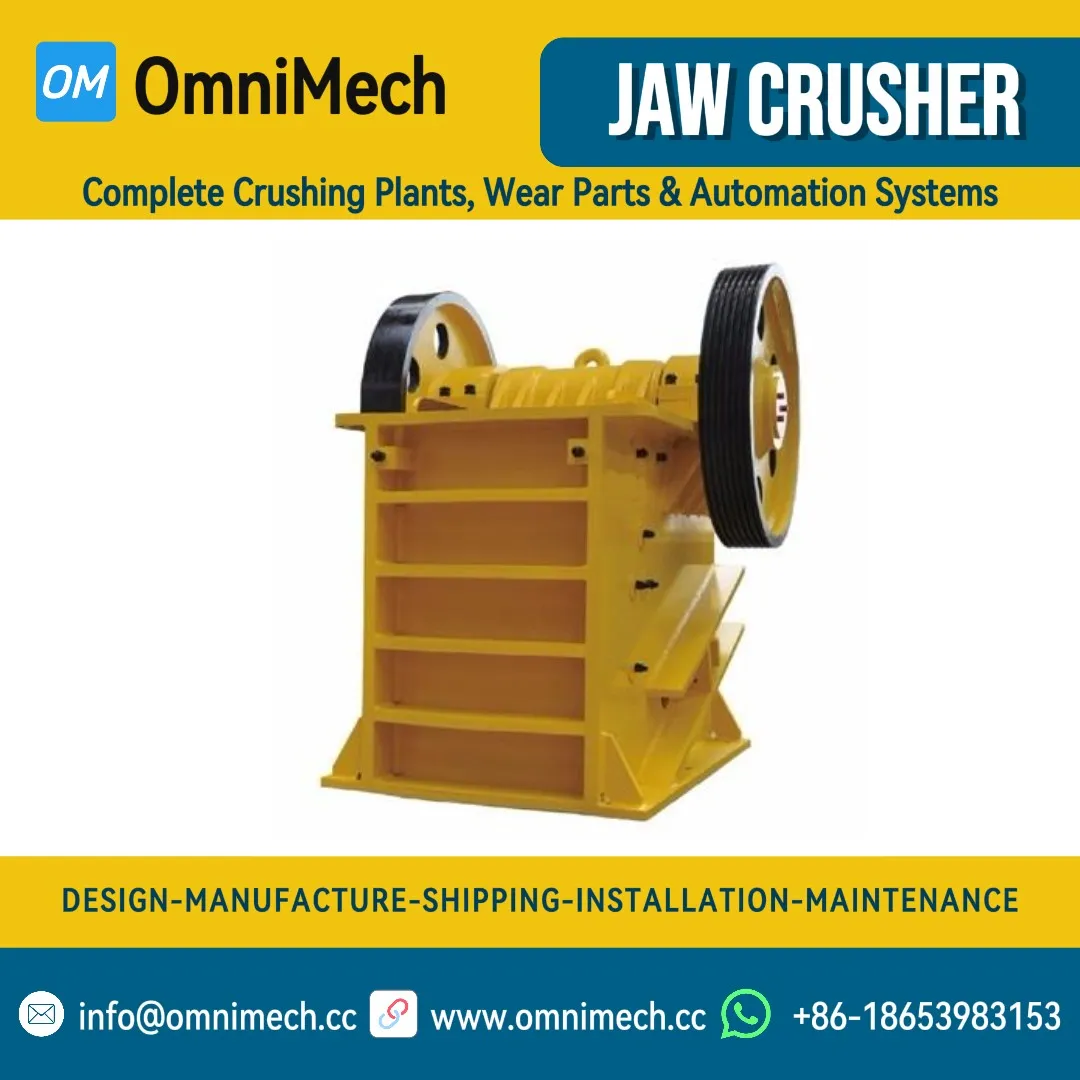
Jaw crushers are the backbone of primary crushing in mining and quarry operations. A well-maintained jaw crusher can operate reliably for 15–20+ years, but neglect accelerates wear, increases downtime, and shortens equipment life dramatically. Unplanned jaw crusher downtime in a 500 TPH plant can cost $15,000–$30,000 per hour in lost production alone.
This guide covers the 10 most critical maintenance practices, with specific procedures, inspection intervals, and troubleshooting advice based on thousands of hours of field experience.
1. Daily Visual Inspection
A 10-minute walk-around inspection before each shift can catch problems before they cause breakdowns.
Check these items daily:
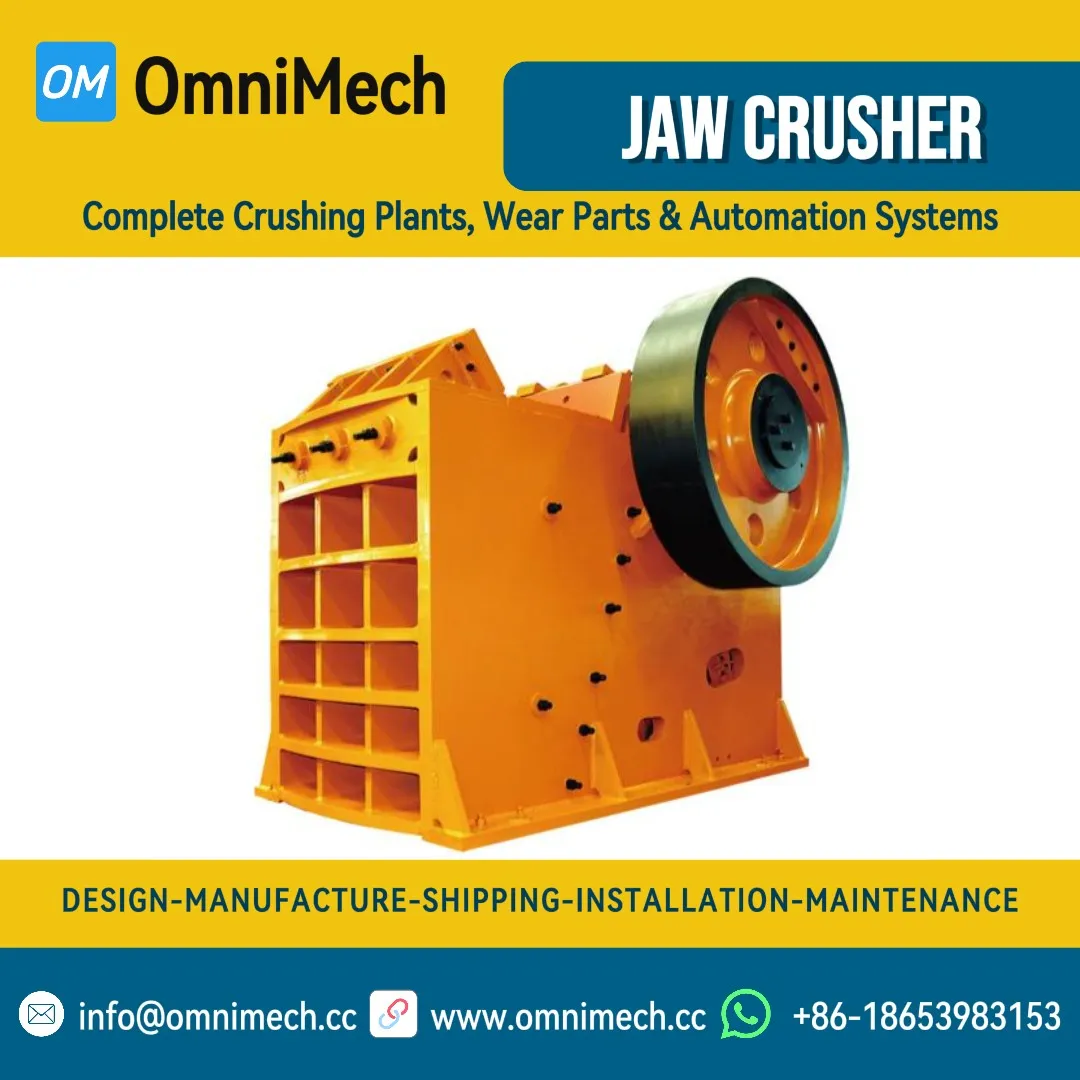
- Jaw die condition: Look for uneven wear patterns, cracks, or loose wedges. Uneven wear (one side worn more than the other) indicates feed distribution problems.
- Toggle plate and seat: Inspect for cracks or deformation. The toggle plate is a safety device designed to break on overload—if it shows fatigue cracking, replace it immediately.
- Tension rod and spring: Ensure the tension rod is intact and the spring maintains proper pull-back force on the swing jaw. A broken tension rod allows the swing jaw to bounce, causing accelerated wear and poor crushing performance.
- Foundation bolts: Check for looseness or cracking around anchor points. Vibration loosens bolts over time—re-torque to specification if any movement is detected.
- Oil leaks: Check around the eccentric shaft bearings, pitman, and toggle area for oil or grease leaks.
- Belt condition: Look for fraying, cracking, or glazing on V-belts.
2. Proper Lubrication
Lubrication is the single most important factor in bearing life. Jaw crusher main bearings (eccentric shaft) typically use either oil bath or grease lubrication.
For grease-lubricated bearings:
- Use a high-quality extreme pressure (EP) grease with NLGI grade 2 consistency
- Grease interval: Every 8 operating hours for main bearings, every 40 hours for toggle bearings
- Grease quantity: 2–3 pumps from a standard manual grease gun per bearing. Over-greasing is as harmful as under-greasing—it generates heat and can blow out seals.
- Never mix incompatible grease types. If switching grease, purge the old grease completely.
For oil-bath lubrication:
- Check oil level daily—maintain between the high and low marks on the sight glass
- Change oil every 2,000 operating hours or annually, whichever comes first
- Use the manufacturer’s specified viscosity grade (typically ISO VG 68 or 100 for jaw crushers)
- Send oil samples for analysis every 500 hours to detect bearing wear metals, contamination, and viscosity degradation
3. Monitor and Replace Jaw Dies
Jaw dies (also called jaw plates or liners) are the primary wear parts. Their condition directly affects crushing performance and product quality.
Wear patterns to watch for:
- Uniform wear: Normal, indicates proper feed distribution
- Bottom-heavy wear: Feed is too fine or feed rate is too low—material spends too long in the lower crushing zone
- One-sided wear: Feed is偏向一侧, indicating improper feed distribution or feeder alignment
- Ridge/groove wear pattern: Corrugated die profile is wearing smooth, reducing crushing efficiency
When to replace jaw dies:
- When the tooth profile height is worn to 25–30% of original height
- When throughput drops 15–20% below normal at the same CSS setting
- When product size increases despite maintaining the same CSS
- Typical jaw die life: 500–2,000 hours depending on material hardness and abrasiveness
Pro tip: When replacing fixed jaw dies, rotate the swing jaw die to the fixed side and install a new die on the swing side. This can extend total die life by 20–30% since the swing die typically wears slower.
4. Bearing Temperature Monitoring
Bearing failure is one of the most common causes of catastrophic jaw crusher breakdowns. Temperature monitoring provides early warning.
Normal operating ranges:
- Main (eccentric shaft) bearings: 45–65°C (113–149°F) above ambient
- Toggle bearings: 40–55°C (104–131°F) above ambient
Action thresholds:
- 5°C above normal: Increase monitoring frequency to every 30 minutes. Check lubrication.
- 10°C above normal: Reduce feed rate by 50%. Investigate cause—check oil level, oil quality, bearing condition.
- 15°C above normal or rapid temperature rise: Shut down immediately. Running a bearing at elevated temperature causes rapid damage—each 10°C rise above normal halves the remaining bearing life.
Common causes of high bearing temperature:
- Insufficient or contaminated lubrication
- Overloading (feed rate too high or feed size too large)
- Misalignment from foundation settlement or bolt looseness
- Bearing damage (spalling, scoring, fatigue)
5. V-Belt Inspection and Tension
V-belts transmit power from the motor to the crusher flywheel. Improper tension causes slippage, excessive wear, and energy loss.
Tension check procedure:
- Measure belt deflection at mid-span with moderate finger pressure (about 10N force)
- Correct deflection is approximately 16mm per meter of span length
- If deflection is too large, belts are too loose; if too small, belts are too tight
- Re-tension after the first 24–48 hours of operation on new belts (they stretch and seat into the grooves)
Belt replacement:
- Replace belts as a complete set—never mix old and new belts on the same drive
- Typical V-belt life: 3,000–5,000 operating hours
- Check sheave groove wear annually—worn grooves cause belt bottoming and slippage even with correct tension
Signs of belt problems:
- Squealing on startup (slippage)
- Excessive vibration at the drive
- Cracking or chunk-out on belt sides
- Powder/residue under the drive (indicates belt material wear)
6. Toggle Plate and Seat Maintenance
The toggle plate serves dual purposes: it transmits crushing force to the fixed jaw, and it acts as a safety fuse to protect the crusher from uncrushable material (tramp iron).
Toggle plate inspection:
- Check for hairline cracks at the ends (most common failure point)
- Measure thickness—replace when worn to 85% of original thickness
- Ensure toggle seat surfaces are smooth and lubricated
- Typical toggle plate life: 6–12 months depending on application
Toggle seat care:
- Keep toggle seat area clean from dust and debris
- Apply a thin film of anti-seize compound to the seat surfaces
- If the seat shows grooving or pitting, resurface or replace—rough seats cause premature toggle plate failure
After a toggle plate break:
- Always investigate the cause before restarting—was it tramp iron, overload, or fatigue?
- Check for damage to the toggle seat, pitman, and surrounding components
- Never install a harder toggle plate “to prevent breakage”—it’s designed to break as a safety device
7. Keep the Crusher Clean
Material buildup around moving parts causes accelerated wear, restricts movement, and hides developing problems.
Critical areas to keep clean:
- Crushing chamber: Remove packed material from jaw die surfaces. Packed material prevents proper crushing action and causes uneven wear.
- Toggle area: Keep the toggle plate, seat, and tension rod area free of accumulated fines. Fines act as abrasive paste.
- Drive area: Clean around motor, sheaves, and belts. Dust buildup on motor fins reduces cooling efficiency.
- Discharge area: Prevent material buildup under the crusher that could block the discharge opening.
Recommended cleaning schedule:
- Daily: Blow down or wash the toggle area and drive
- Weekly: Clean the crushing chamber during scheduled shutdown
- Monthly: Thorough cleaning including under-crusher area and foundation
8. Hydraulic System Maintenance
For jaw crushers with hydraulic CSS adjustment or hydraulic toggle:
Daily checks:
- Hydraulic fluid level in the reservoir
- Visible leaks at hoses, fittings, and cylinders
- Hose condition (cracking, abrasion, bulging)
Monthly checks:
- Hydraulic filter condition—replace per manufacturer’s schedule or when differential pressure exceeds specification
- Cylinder rod condition—chrome surface should be smooth and free of scoring
- Relief valve setting verification
Hydraulic fluid:
- Change per manufacturer’s recommendation (typically every 2,000–3,000 hours)
- Use only the specified fluid grade—wrong viscosity causes sluggish operation or overheating
- Keep the reservoir breather clean to prevent contamination ingestion
9. Operator Training and Safe Practices
Even the best-maintained crusher will suffer if operators don’t follow proper procedures.
Essential training topics:
- Startup sequence: Start the crusher empty, allow it to reach full speed, then start the feeder. Never start under load.
- Shutdown sequence: Stop the feeder first, allow the crusher to clear all material, then shut down the crusher. This prevents material packing in the chamber.
- Feed control: Maintain consistent, choke-fed operation. Intermittent feeding causes uneven wear and reduces throughput.
- Tramp iron response: If the crusher stalls on tramp iron, shut down immediately and clear manually. Never attempt to restart a stalled crusher without clearing the obstruction.
- CSS adjustment: Only adjust CSS when the crusher is stopped and empty. Never adjust while running.
Safety requirements:
- Lockout/tagout (LOTO) for all maintenance activities
- Never enter the crushing chamber without physically blocking the swing jaw
- Hearing protection mandatory—jaw crushers produce 95–105 dB(A) at 1 meter
- Dust suppression must be operational during crushing
10. Maintain Detailed Records
Record-keeping transforms maintenance from reactive to strategic.
Track these metrics:
- Operating hours: Daily, weekly, monthly totals for each crusher
- Wear part consumption: Date, hours, and reason for each jaw die, toggle plate, and bearing replacement
- Bearing temperature logs: Daily readings with ambient temperature reference
- Oil analysis results: Trend data showing wear metal concentrations over time
- Production data: TPH, product gradation, and power consumption—correlate with wear rates
- Downtime events: Cause, duration, and corrective action for every unplanned stoppage
Using records for optimization:
- Calculate wear cost per ton for each part—this is your key benchmark
- Identify seasonal patterns (higher wear in wet conditions from sticky material)
- Predict remaining part life based on wear rate trends rather than fixed schedules
- Justify equipment upgrades or modifications with data, not intuition
Maintenance Schedule Summary
| Task | Frequency | Duration |
|---|---|---|
| Visual walk-around | Every shift | 10 min |
| Grease main bearings | Every 8 hours | 5 min |
| Check oil level | Daily | 2 min |
| Belt tension check | Weekly | 15 min |
| Toggle plate inspection | Weekly | 10 min |
| Jaw die measurement | Monthly | 20 min |
| Oil change | 2,000 hours | 60 min |
| Oil sample analysis | 500 hours | 5 min |
| Hydraulic system check | Monthly | 30 min |
| Complete overhaul | 10,000–15,000 hours | 2–3 days |
Conclusion
Consistent, thorough maintenance is the difference between a jaw crusher that runs 15+ years with minimal downtime and one that requires constant repair and replacement. The investment in regular maintenance—about 2–3% of equipment replacement cost annually—pays for itself many times over in avoided downtime, extended wear part life, and predictable operating costs.
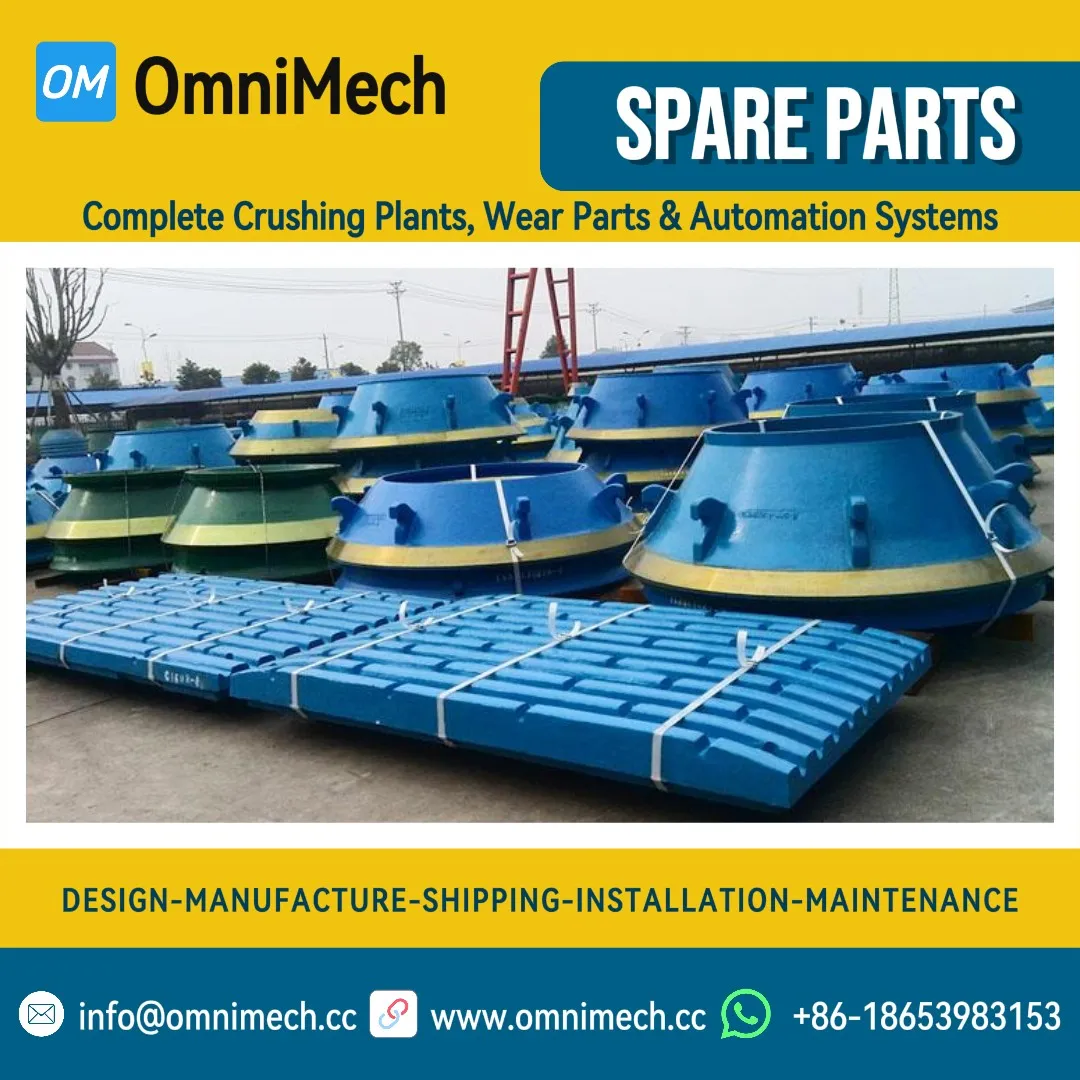
At OmniMech, we supply high-quality jaw crusher wear parts (jaw dies, toggle plates, cheek plates) in standard and custom alloys, along with genuine replacement bearings and hydraulic components. Contact us for competitive pricing and expert technical support.