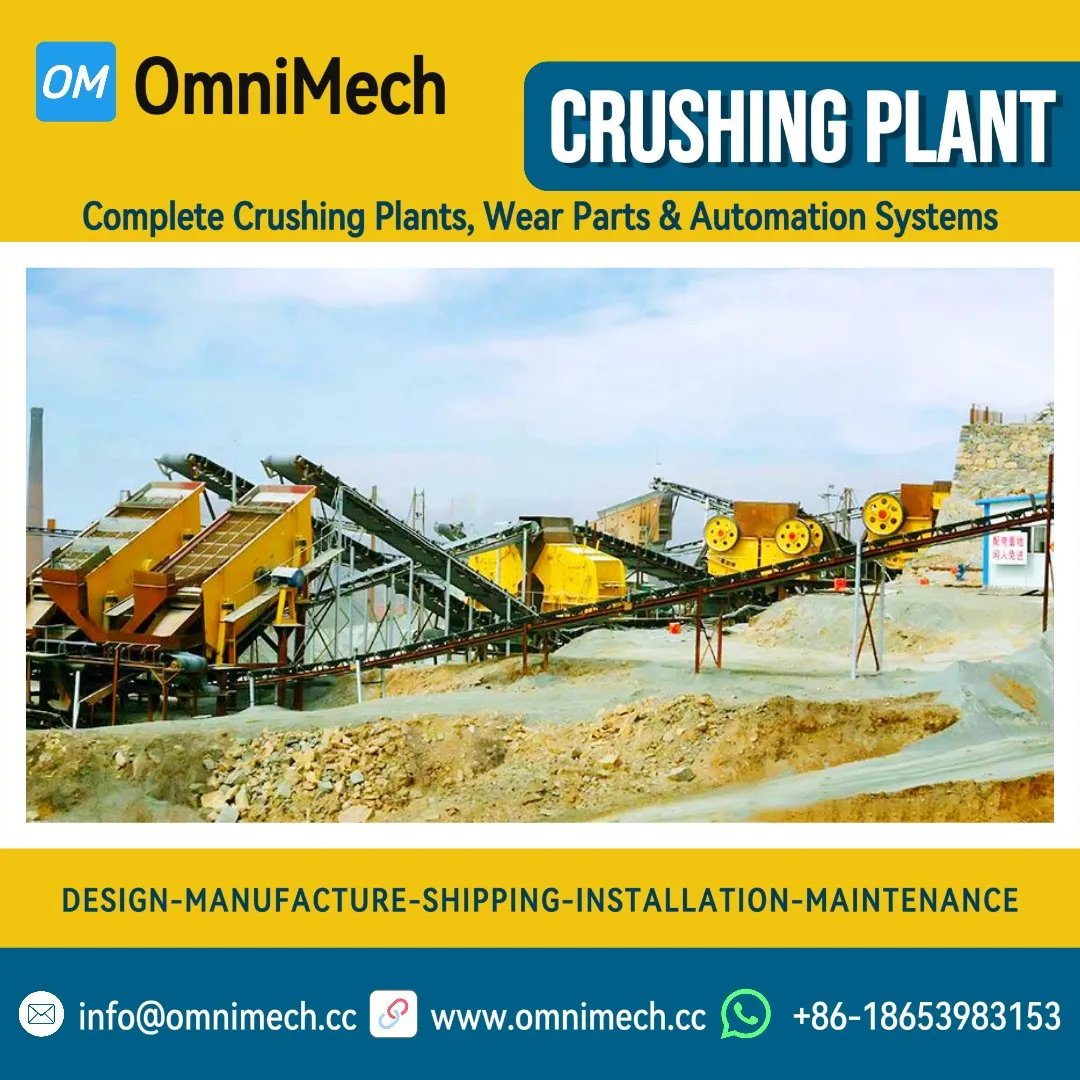
Case Study: 500 TPH Limestone Crushing Plant in Malaysia
omnimech Team
omnimech Team
Project Overview
In 2023, a leading Malaysian quarry operator approached OmniMech with a challenge: their existing crushing plant was producing only 280 TPH—far below the 500 TPH needed to meet growing demand from Penang and Kuala Lumpur’s construction boom. The existing equipment was over 15 years old, suffered frequent breakdowns, and produced inconsistent aggregate gradation that failed to meet Malaysia’s JKR (Jabatan Kerja Raya) specification requirements.
The client needed a complete turnkey solution—from equipment selection and plant layout to electrical control systems and commissioning support—all within a tight 6-month timeline to avoid missing the peak construction season.
Client Background
- Location: Ipoh, Perak, Malaysia (one of the country’s richest limestone regions)
- Material: Medium-hard limestone (Mohs 3.5–4), moderate moisture (3–5%)
- Application: Construction aggregate for concrete, road base, and asphalt
- Required products: 0–5mm (manufactured sand), 5–10mm, 10–20mm, 20–40mm
- Operating hours: 16 hours/day, 6 days/week
- Target capacity: 500 TPH at the combined product output
Challenges
1. Limited Site Space
The quarry was located on a hillside with a narrow bench only 35 meters wide. Conventional linear plant layouts (requiring 60+ meters of length) were not feasible. Equipment needed to be arranged in a compact, multi-level configuration.
2. High Moisture Content
Malaysia’s tropical climate means frequent rainfall (2,500mm/year in Perak). The limestone moisture content regularly exceeded 5% during monsoon season (October–March), causing material handling challenges—sticking in chutes, blinding on screens, and packing in crusher chambers.
3. Strict Product Quality Requirements
Malaysia’s JKR specification requires:
- Flakiness index < 25% for 10–20mm and 20–40mm aggregate
- Sand equivalent value > 60% for 0–5mm fraction
- Consistent gradation within ±5% of target on each sieve
- The client’s previous plant regularly failed these tests, resulting in rejected loads and customer complaints.
4. Tight Project Timeline
The client needed the plant operational within 6 months to supply a major highway project. Delays would result in contract penalties and lost market share to competitors.
5. Existing Infrastructure Constraints
The site had limited electrical power (only 800kVA available from the utility), requiring careful power management and load scheduling. The access road could only accommodate 20-ton trucks, limiting the size of equipment that could be delivered.
Our Solution
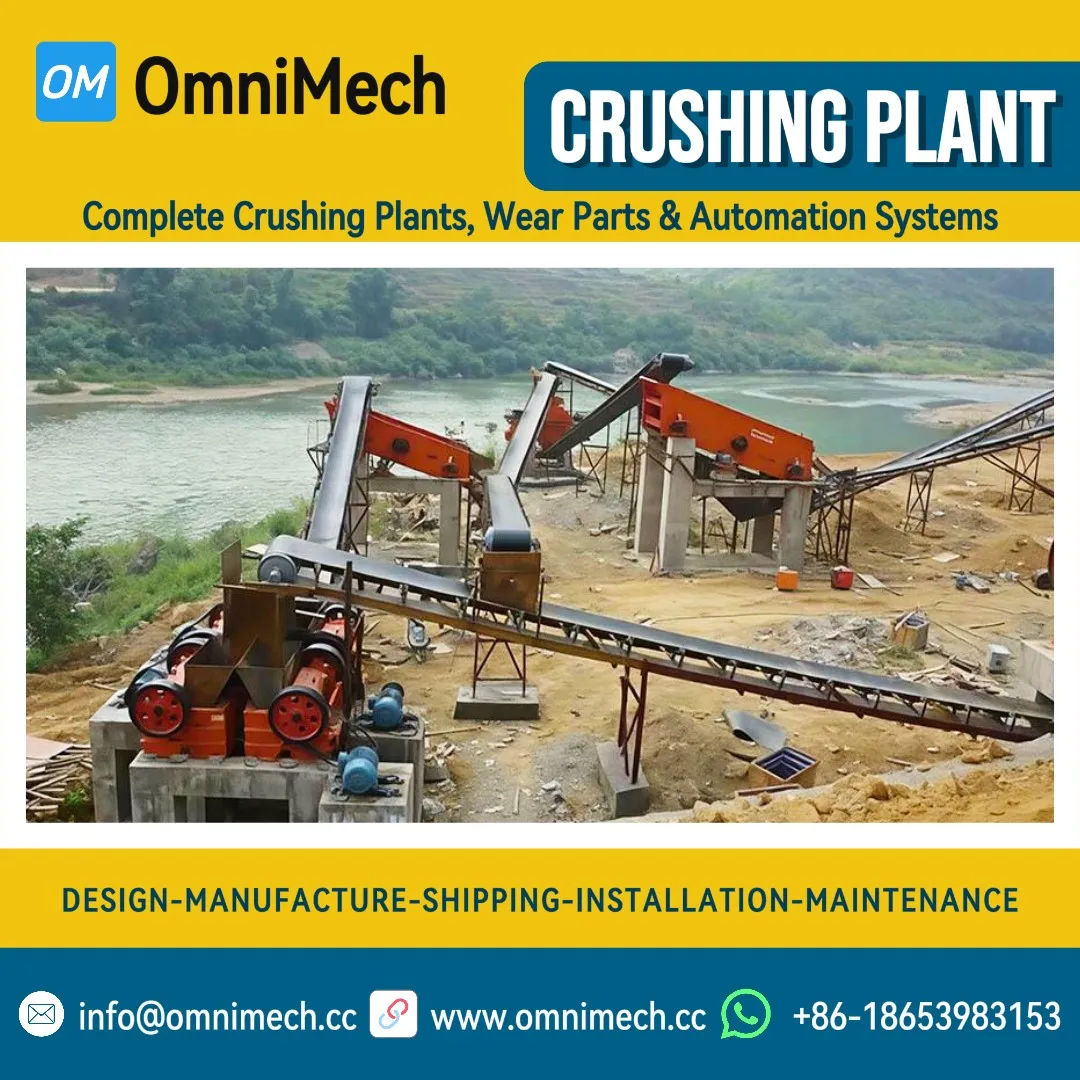
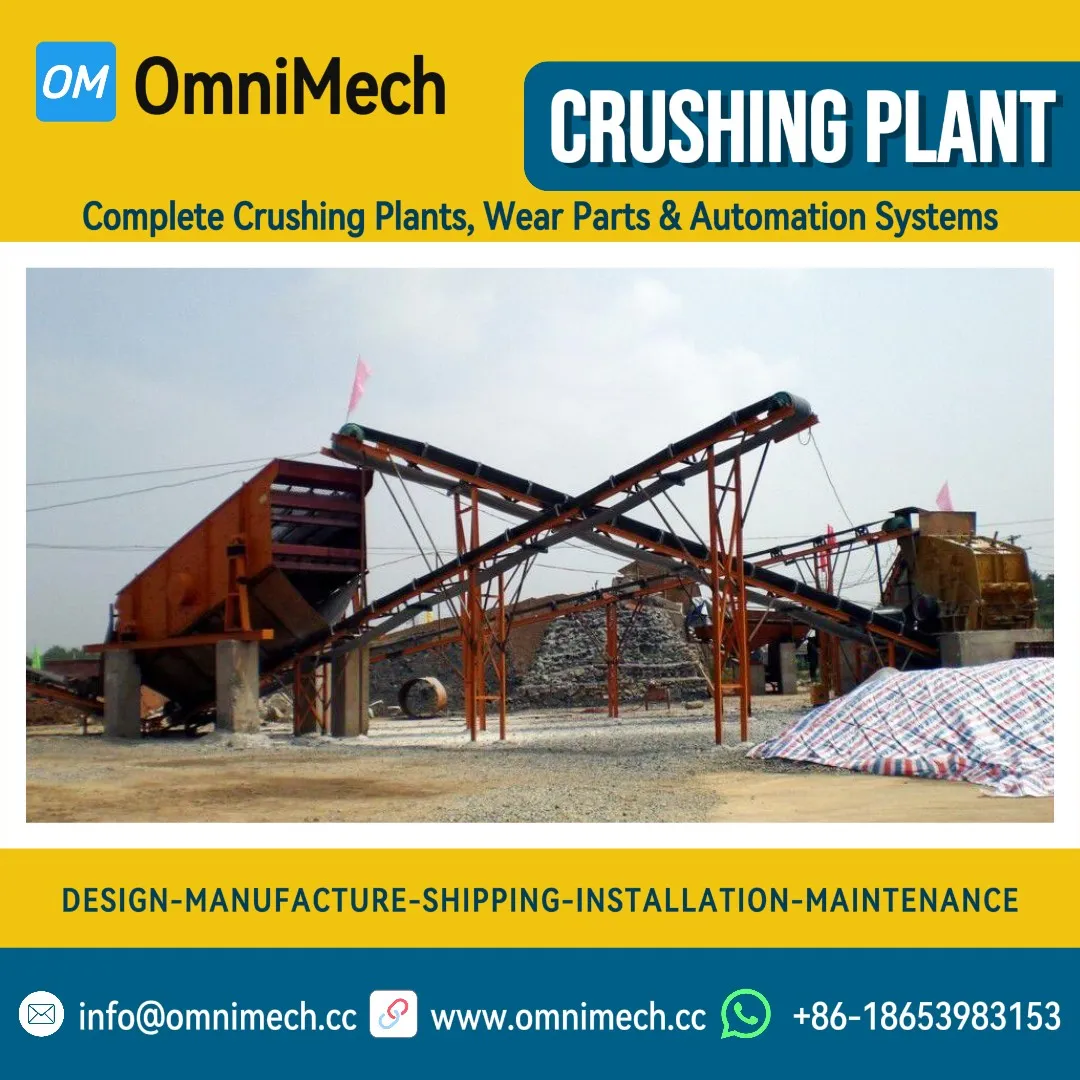
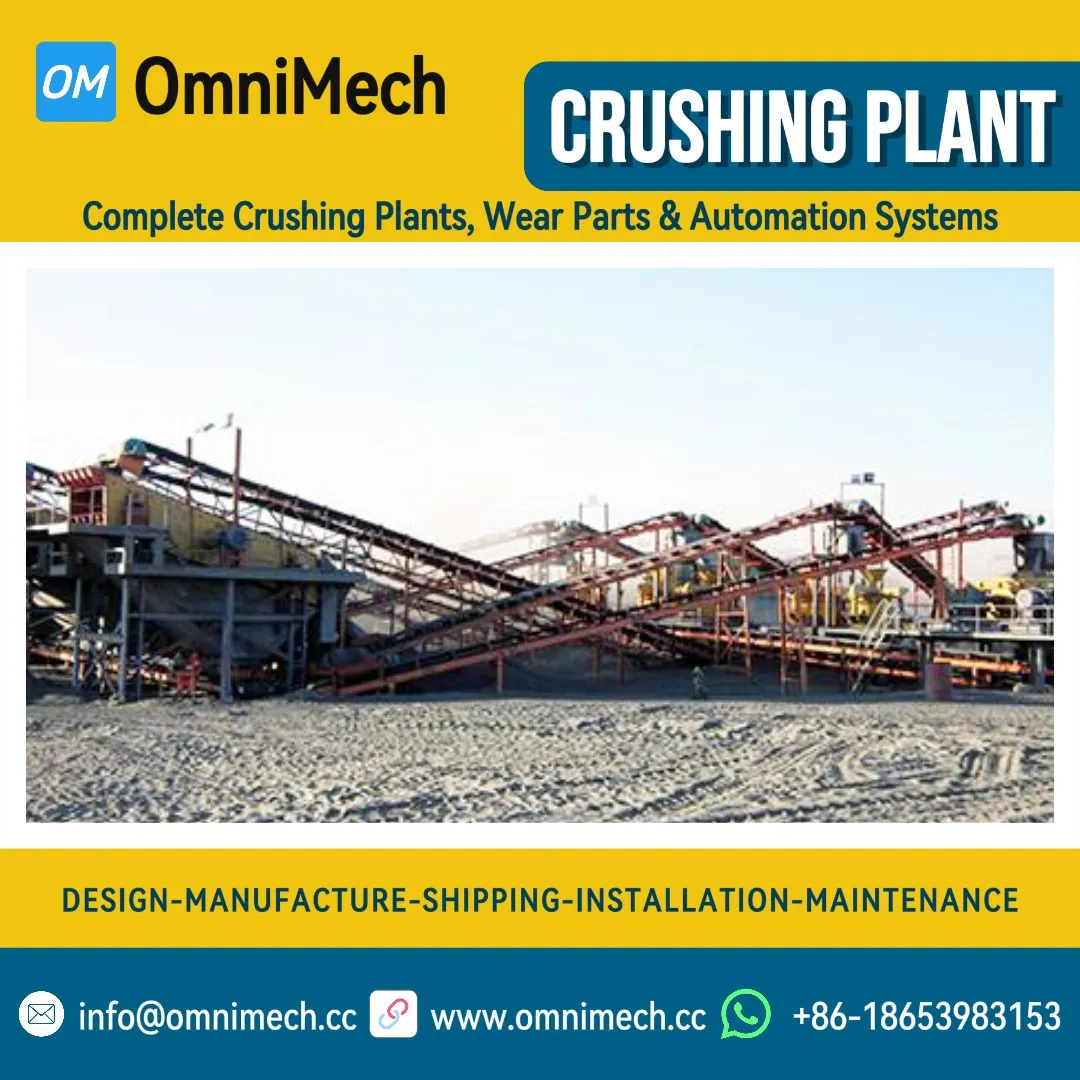
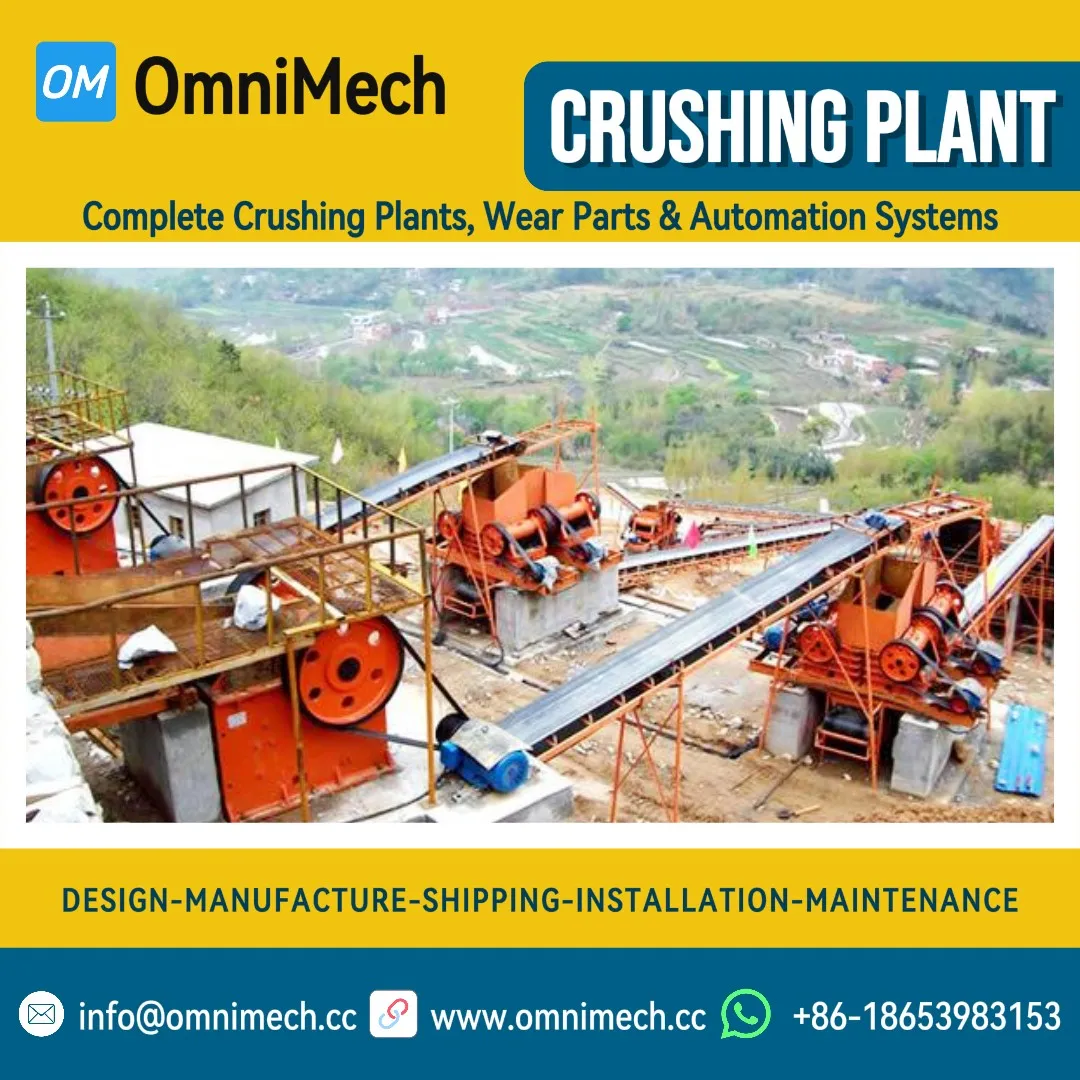
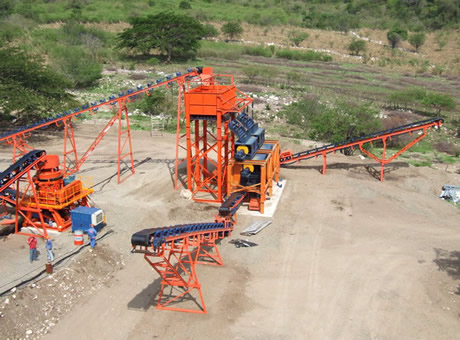
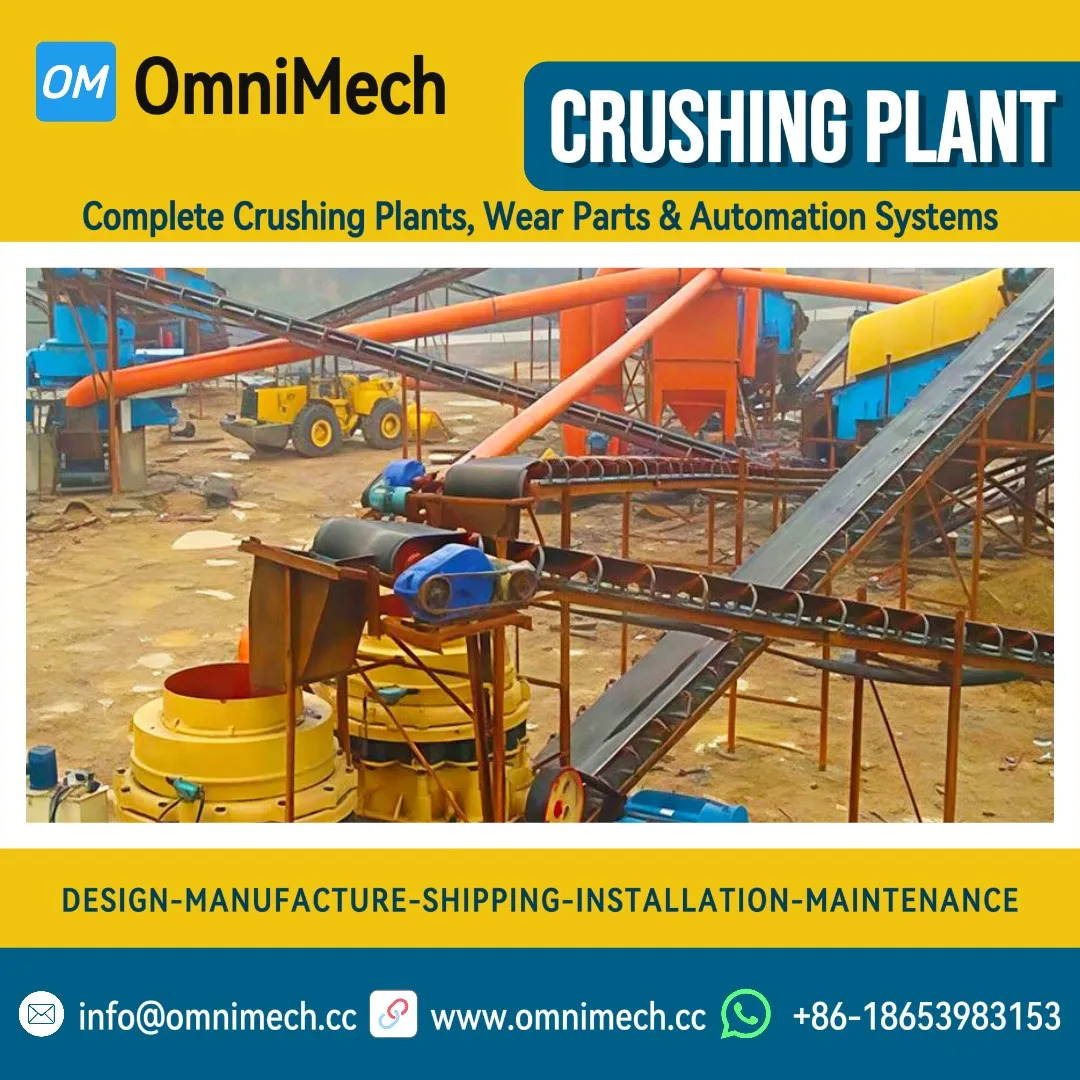
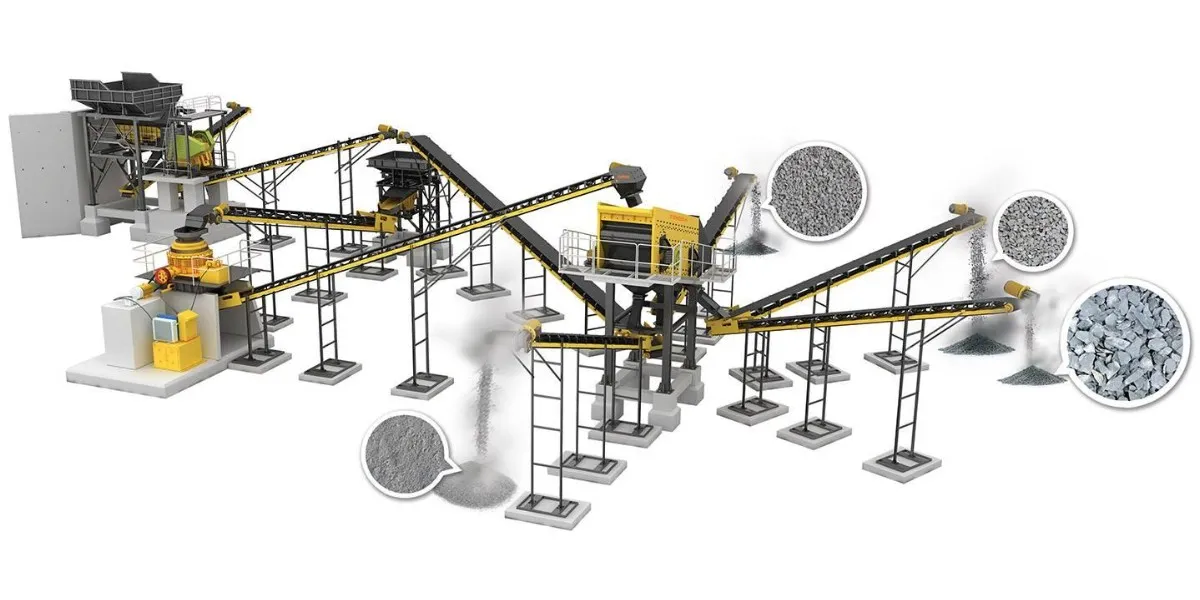
OmniMech designed a compact, high-efficiency crushing plant tailored to the specific site conditions and product requirements.
Equipment Selection
| Stage | Equipment | Model | Specification |
|---|---|---|---|
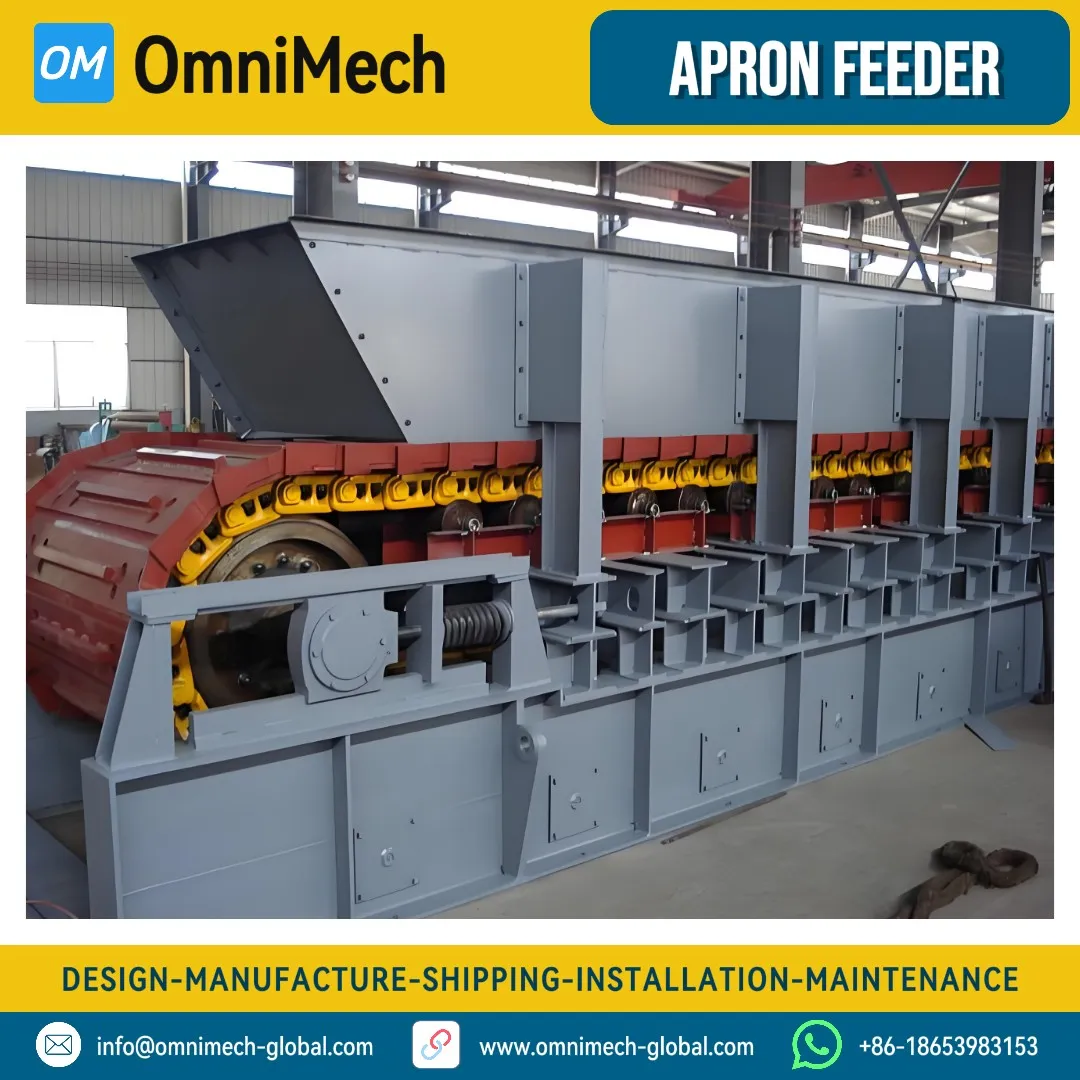
| Primary | Vibrating Feeder | ZSW-490×110 | 80–120 TPH feed rate, 30mm grizzly bar spacing |
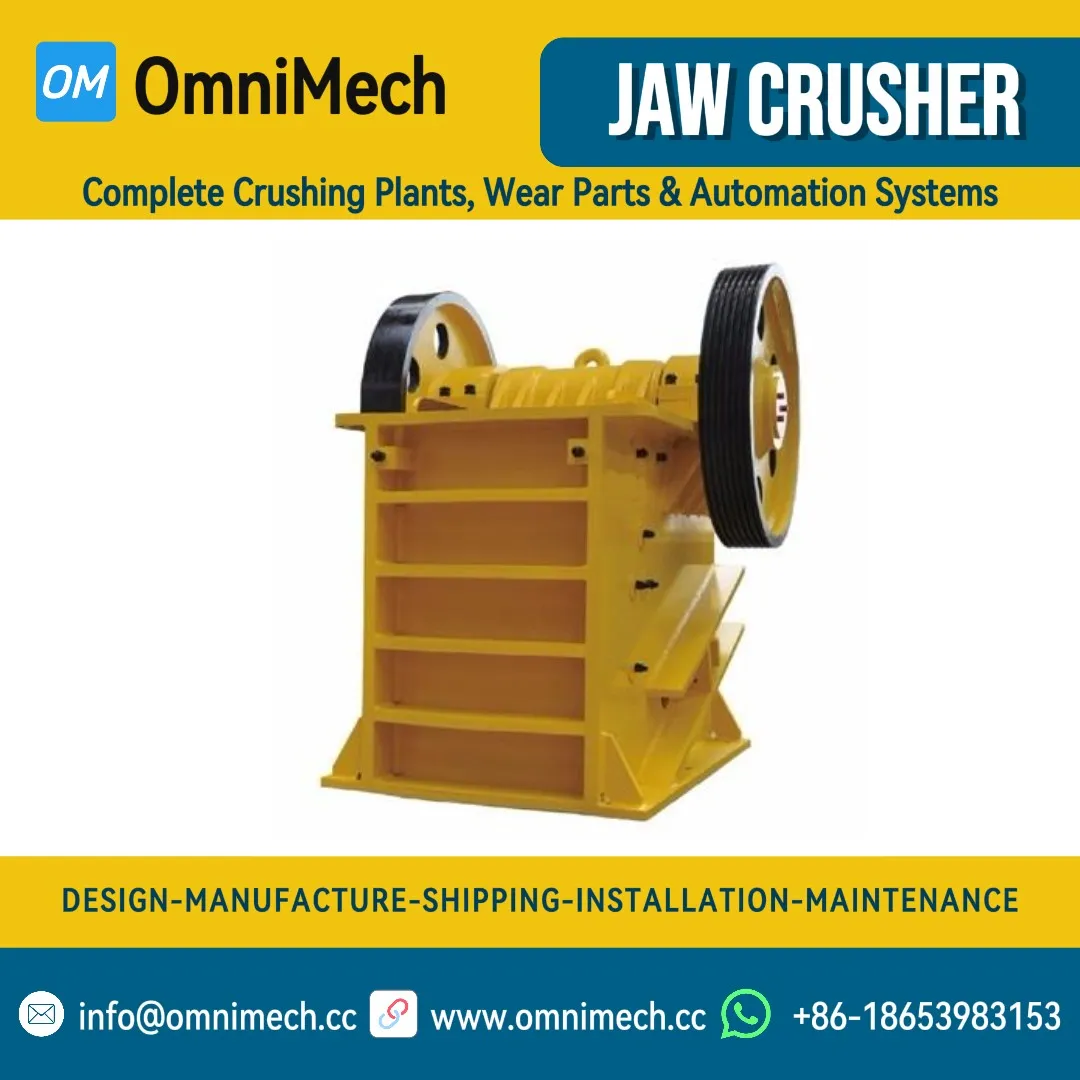
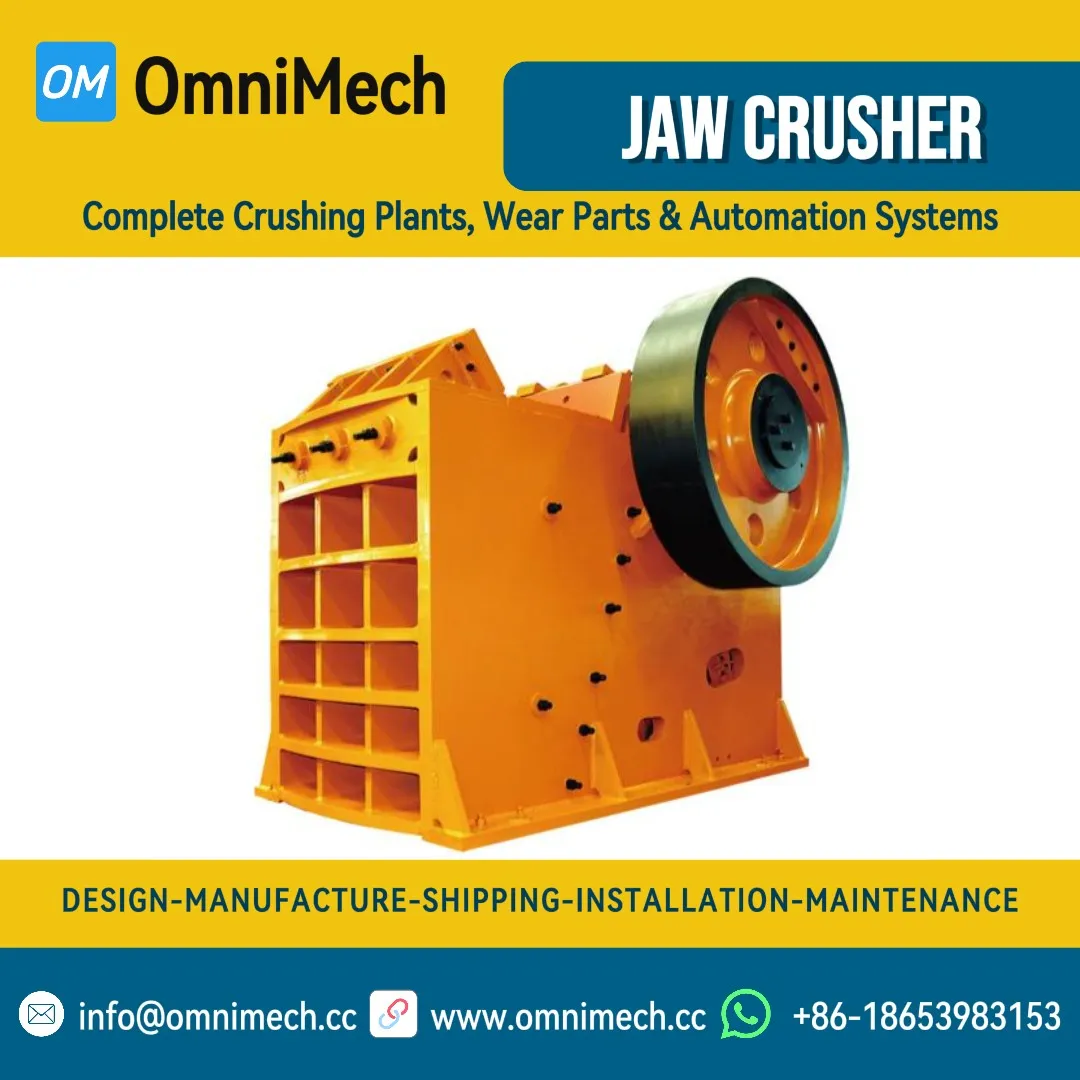
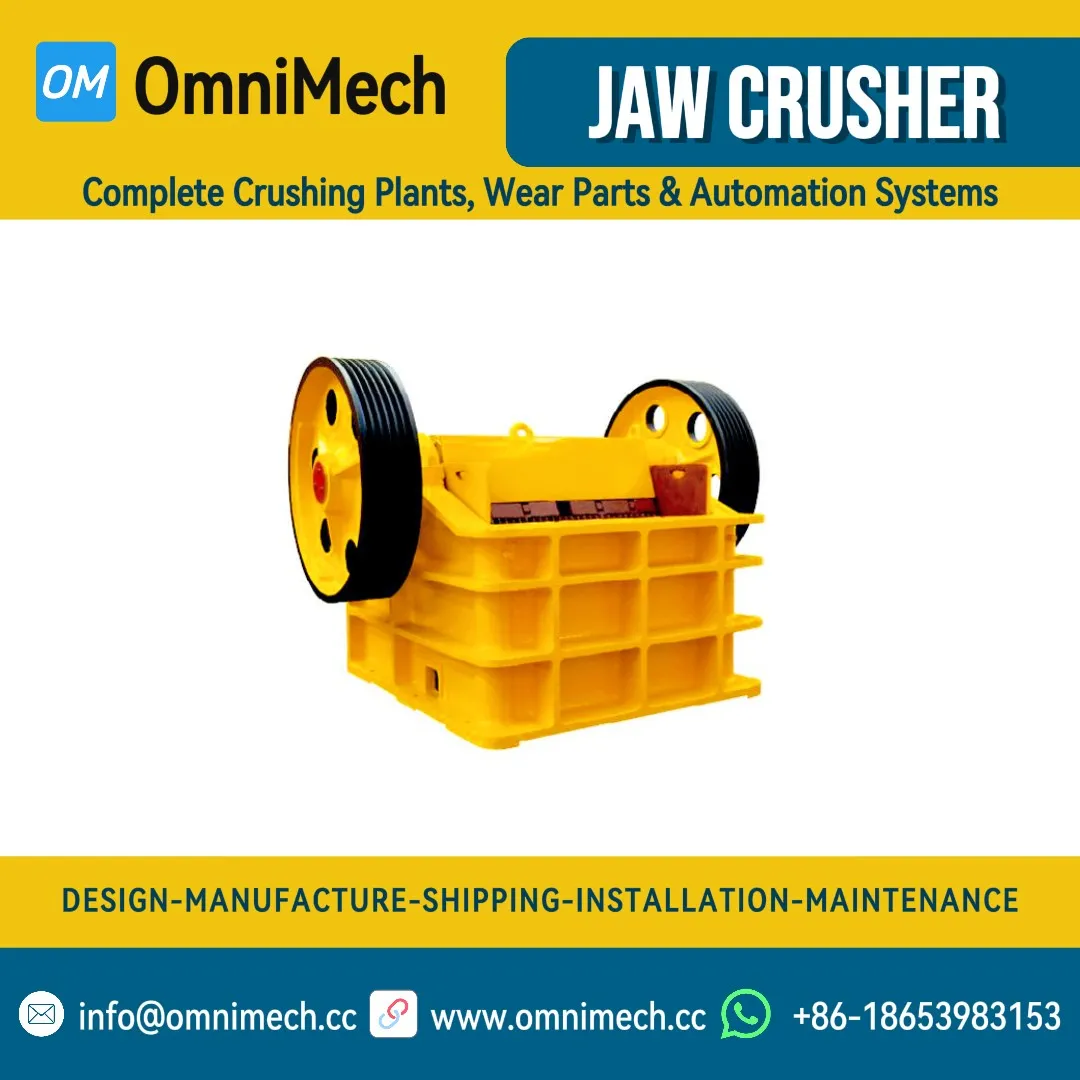
| Primary | Jaw Crusher | PE-750×1060 | Feed opening 750×1060mm, CSS 80–180mm, 110kW |
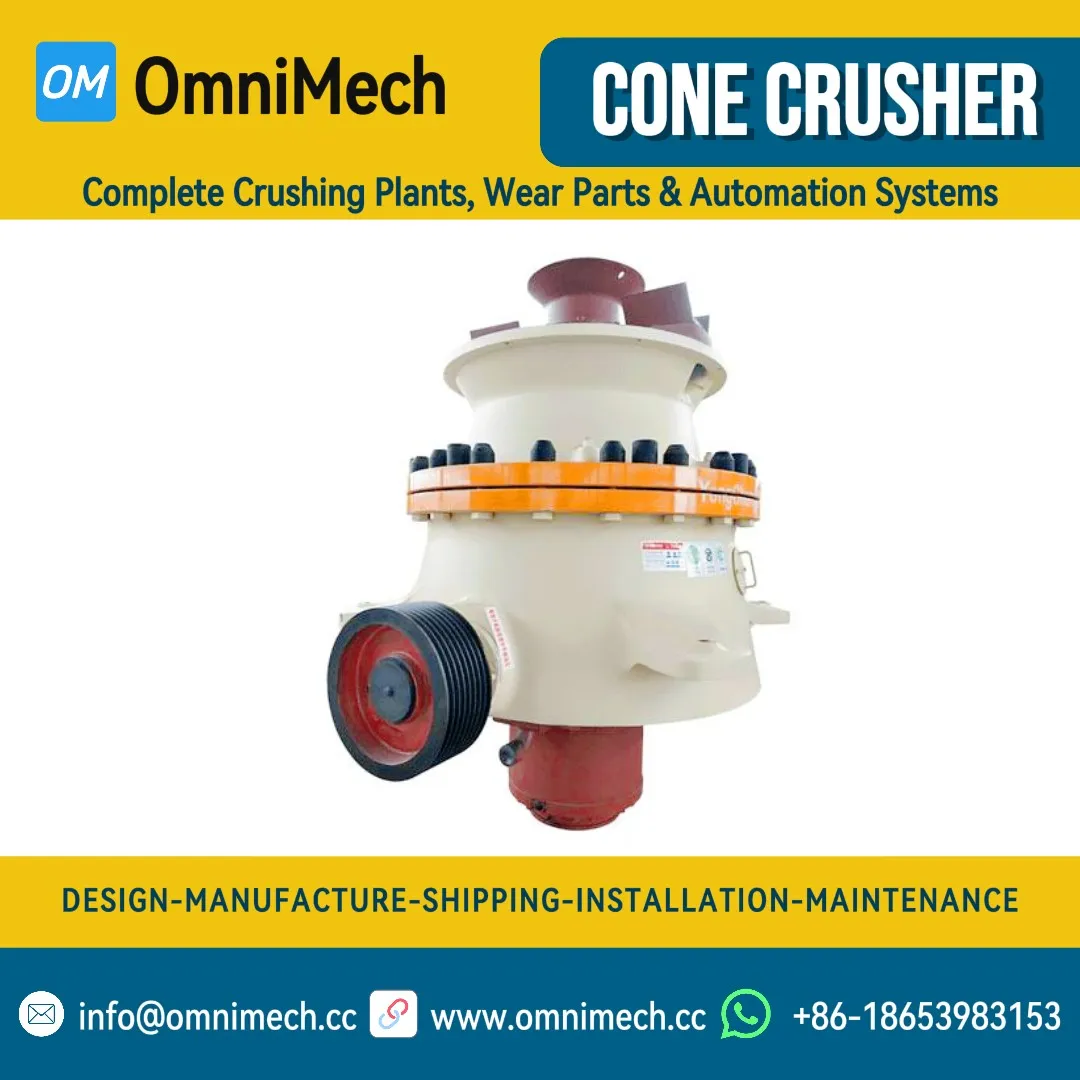
| Secondary | Cone Crusher | PYB-1750 | Coarse chamber, CSS 25–50mm, 160kW |
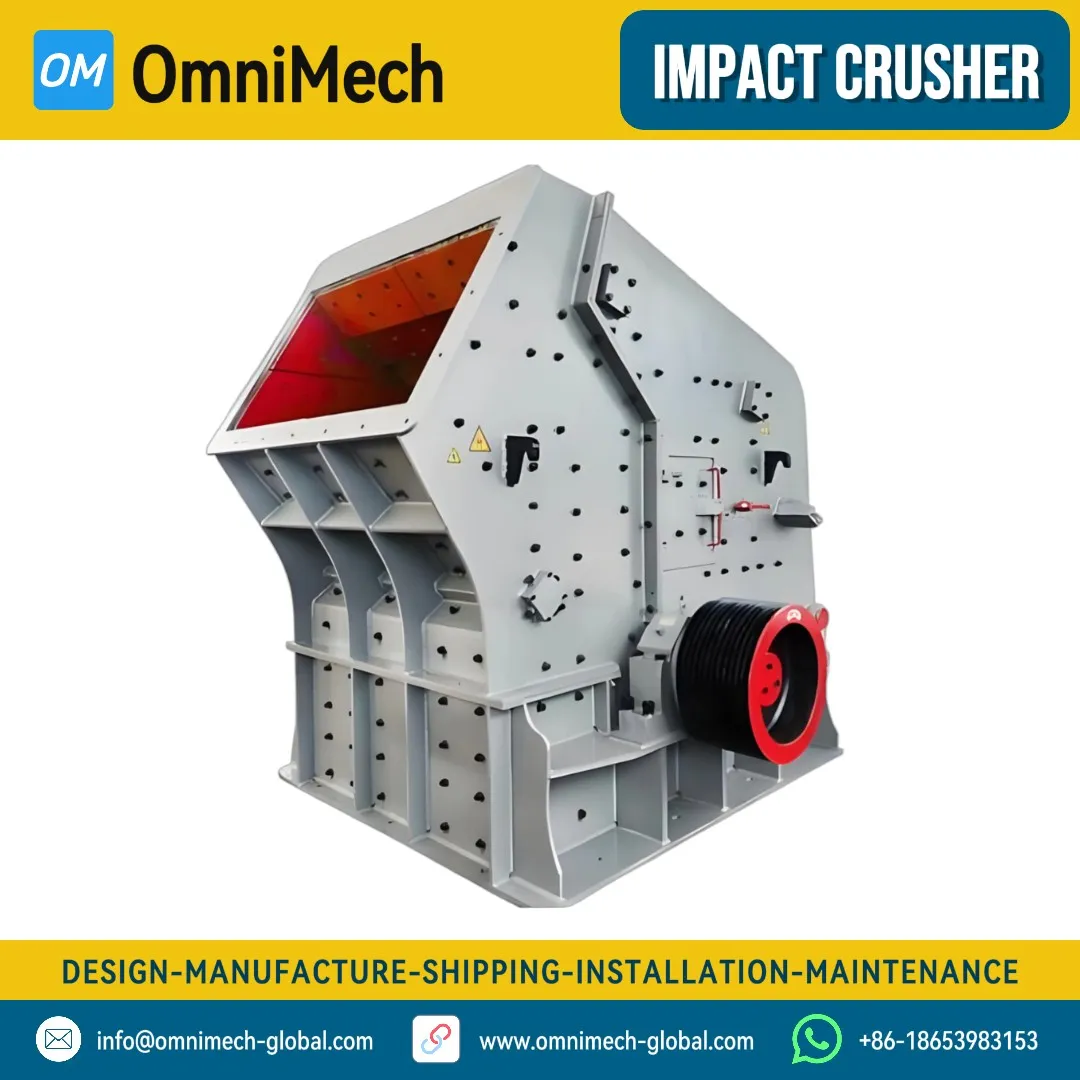
| Tertiary | Impact Crusher | PF-1320 | Feed ≤350mm, 3-row blow bar, 250kW |
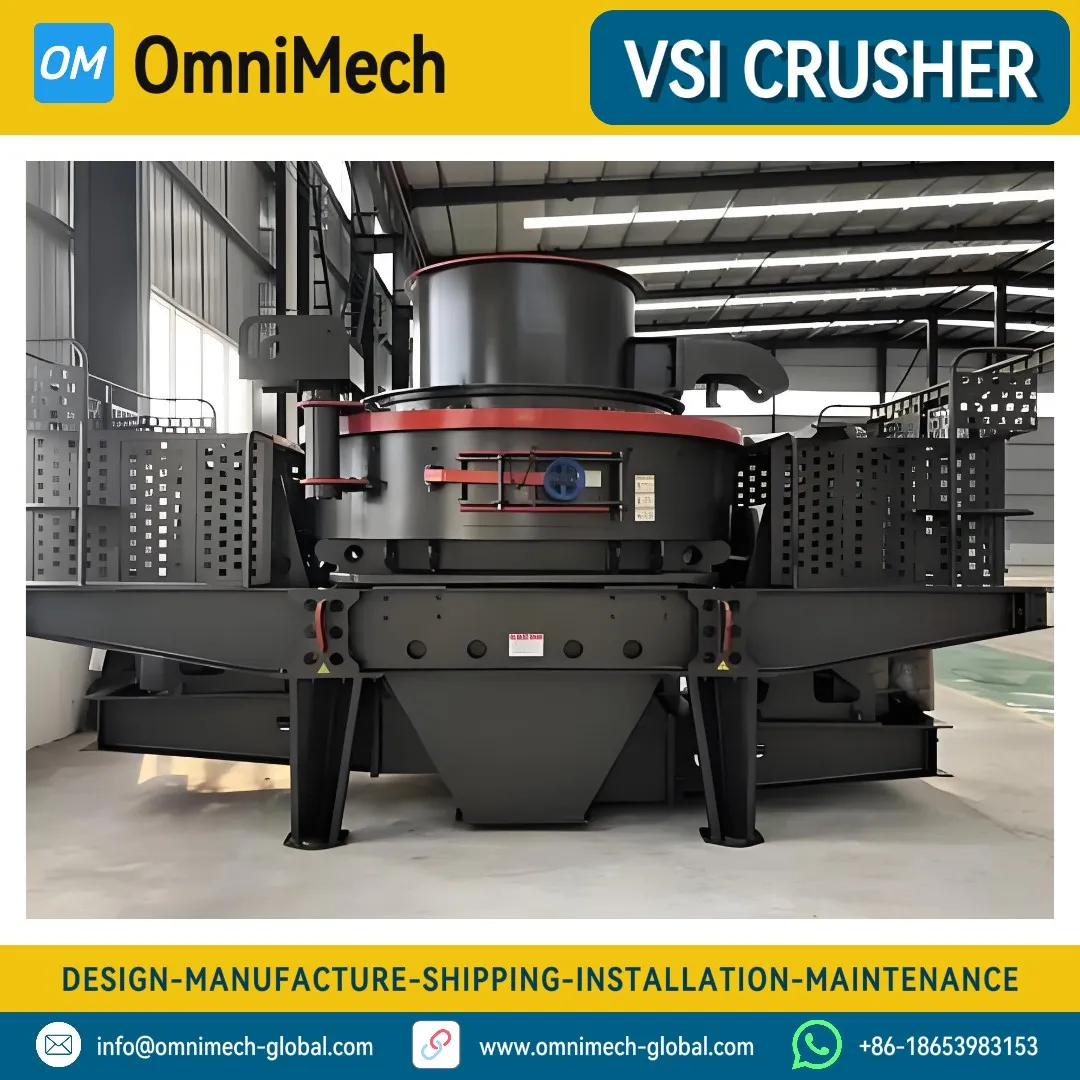
| Sand Making | VSI Crusher | VSI-8500 | Rotor Ø850mm, twin motor 2×90kW |
| Screening | Vibrating Screen | 3YK-2160 | 3 decks, 20×6ft, polyurethane panels |
| Screening | Vibrating Screen | 2YK-1545 | 2 decks, 15×4.5ft, for sand classification |
Plant Layout: Compact Multi-Level Design
To fit within the 35m-wide bench, we designed a two-level arrangement:
- Upper level (elevation +8m): Primary jaw crusher, surge bin, and secondary cone crusher
- Lower level (elevation 0m): Tertiary impact crusher, VSI sand maker, and both vibrating screens
- Material transfer between levels via enclosed chutes with rubber lining to reduce noise and wear
This layout reduced the plant footprint by 45% compared to a conventional single-level arrangement.
Moisture Management Features
To handle Malaysia’s high-rainfall conditions:
- Covered feed hopper with 50-ton capacity and drainage system
- Rubber-lined chutes at all transfer points to prevent material sticking
- Heated vibrating screen decks (electrical trace heating on screen frames) to prevent blinding during wet conditions
- Water spray system at the primary crusher discharge for dust suppression without over-wetting the product
- Polyurethane screen panels instead of woven wire—polyurethane is 10x more resistant to blinding in wet conditions
Electrical Control System
OmniMech supplied a complete electrical control system including:
- Main distribution board with 1600kVA step-down transformer (33kV to 400V)
- VFD (Variable Frequency Drive) on all crusher motors for soft start and speed optimization
- PLC control system (Siemens S7-1200) with HMI touch screen for centralized operation
- Load management system to prioritize crusher startup sequence and prevent power demand peaks exceeding the 800kVA utility supply
- Remote monitoring via cloud-connected gateway for real-time performance tracking from the client’s office
Product Quality Optimization
To meet JKR specifications:
- The impact crusher in the tertiary stage produces excellent cubical particle shape (flakiness index typically 15–20%, well below the 25% limit)
- VSI sand maker with rock-on-rock configuration produces manufactured sand with proper gradation and sand equivalent value >65%
- Closed-circuit screening with oversize return conveyor ensures consistent gradation within ±3% of target
Project Execution Timeline
| Phase | Duration | Activities |
|---|---|---|
| Engineering & Design | Weeks 1–4 | Plant layout, structural design, electrical design |
| Manufacturing | Weeks 5–16 | Equipment fabrication, quality inspection, test run |
| Shipping | Weeks 17–18 | Containerized shipping from Qingdao to Penang |
| Civil Works | Weeks 5–20 | Foundation, steel structure, cable trays (parallel with manufacturing) |
| Installation | Weeks 19–24 | Mechanical installation, electrical wiring, piping |
| Commissioning | Weeks 25–26 | Dry run, wet run, performance testing |
| Training | Week 27 | Operator and maintenance staff training |
Total project duration: 27 weeks (6.3 months)—delivered on schedule.
Results
After 3 months of operation, the plant achieved the following performance:
Production Performance
- Actual capacity: 520–560 TPH (exceeding the 500 TPH target by 4–12%)
- Availability: 92% (vs. 78% with the old plant)
- Effective operating hours: 14.7 hours/day average (accounting for planned and unplanned stops)
Product Quality
- Flakiness index: 17% average (JKR limit: 25%)
- Sand equivalent value: 68% average (JKR requirement: >60%)
- Gradation consistency: Within ±3% of target on all sieves
- Rejected loads: Zero in the first 3 months (vs. 8–12% rejection rate with old plant)
Cost Efficiency
- Energy consumption: 2.8 kWh/ton (15% lower than comparable plants due to VFD optimization)
- Wear parts cost: $0.12/ton (impact crusher blow bars are the primary cost item for limestone)
- Maintenance downtime: 8 hours/month average (30% less than industry benchmark)
Environmental
- Dust emission: <5 mg/m³ at plant boundary (compliant with Malaysian DOE standards)
- Noise level: 82 dB(A) at 50m from plant (rubber lining and enclosed chutes significantly reduced noise)
- Water recycling: 85% of process water recycled through a settling pond system
Client Testimonial
“OmniMech delivered exactly what they promised—a compact, high-capacity plant that fits our challenging site and consistently produces aggregate that passes JKR specs every time. The electrical control system with remote monitoring has been a game-changer for our operations. We can track production and equipment status from our office in Ipoh without driving to the quarry.”
— Operations Director, Malaysian Quarry Client
Long-Term Partnership
Following the successful commissioning, OmniMech continues to support this client with:
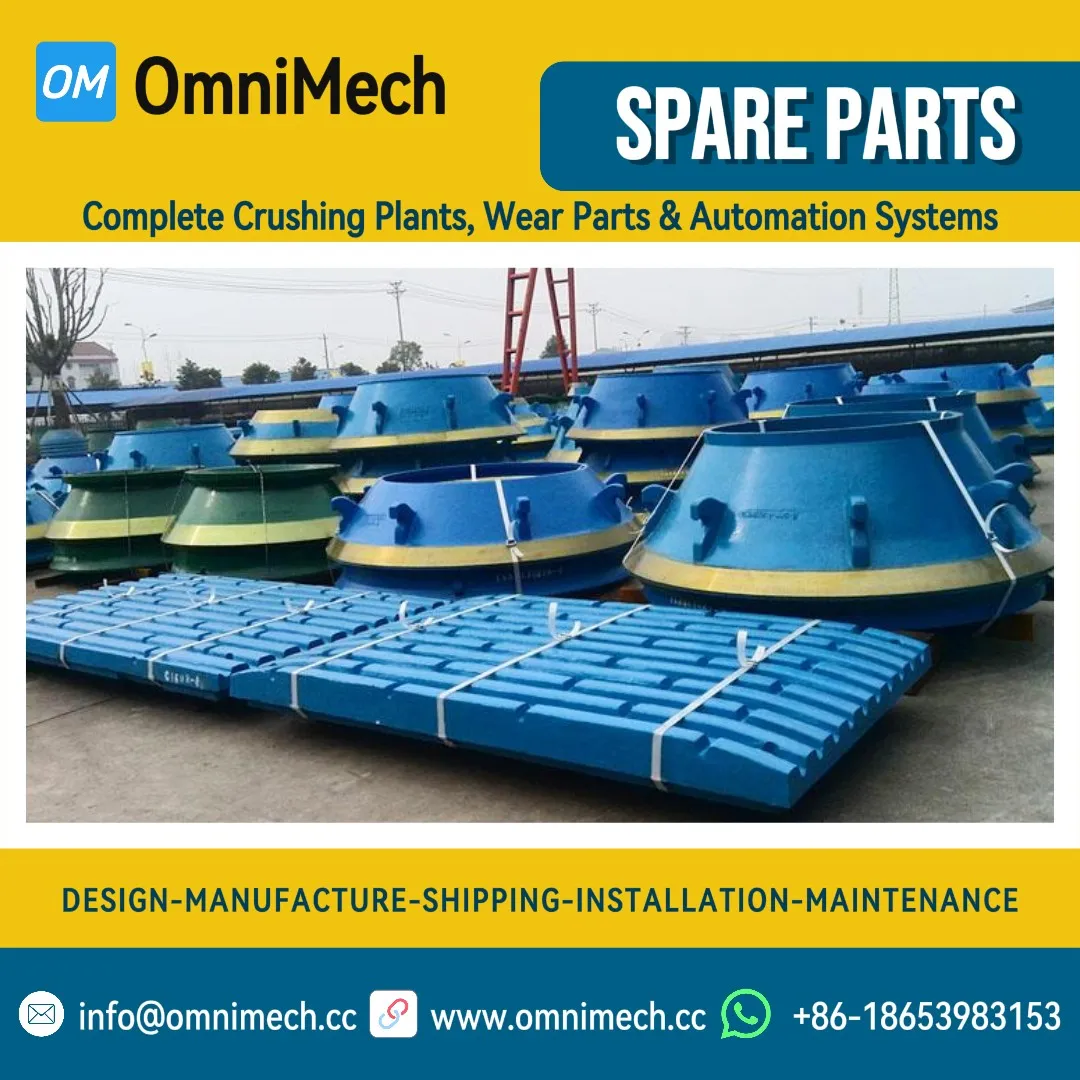
- Spare parts supply: Jaw dies, cone liners, impact blow bars, and screen panels shipped within 15 days of order
- Annual inspection: OmniMech engineers visit the site annually for a comprehensive equipment health check
- Remote monitoring support: 24/7 access to OmniMech’s technical team for troubleshooting via the cloud-connected monitoring system
- Wear parts optimization: Based on operating data, we recommended switching from standard Mn13 blow bars to Mn18Cr2 alloy, extending blow bar life from 45 days to 70+ days
Conclusion
This project demonstrates OmniMech’s capability to deliver complete, customized crushing plant solutions that address site-specific challenges—from compact layouts for constrained spaces to moisture management for tropical climates. The 500+ TPH limestone plant in Malaysia has been operating successfully since Q4 2023, consistently exceeding performance targets and producing aggregate that meets the country’s strict quality specifications.
If you’re facing similar challenges with your crushing operation, contact OmniMech for a no-obligation assessment and customized proposal.