The Future of Crushing Technology: Trends to Watch in 2025
omnimech Team
omnimech Team
Introduction
The crushing and screening industry is undergoing a technological transformation. After decades of incremental improvements, several converging technologies—artificial intelligence, IoT, electrification, and advanced materials—are reshaping how crushing plants are designed, operated, and maintained.
For mining companies and aggregate producers, staying ahead of these trends isn’t just about competitive advantage—it’s about survival in an industry where margins are tight and regulatory pressures are increasing. This article examines the five most significant technology trends that will impact crushing operations in 2025 and beyond.
1. Artificial Intelligence and Predictive Maintenance
AI and machine learning are moving from pilot programs to production deployment in crushing operations worldwide.
Predictive Maintenance
Traditional maintenance follows either a reactive approach (fix it when it breaks) or a preventive schedule (replace parts on a fixed interval). Both have significant drawbacks—reactive maintenance causes unplanned downtime costing $10,000–$50,000 per hour in large operations, while preventive maintenance replaces parts that still have 30–50% useful life remaining.
AI-powered predictive maintenance uses sensor data (vibration, temperature, oil analysis, power draw) to predict component failure days or weeks in advance:
- Wear part life prediction: ML models trained on historical wear data can predict jaw die or cone liner remaining life with ±10% accuracy, enabling just-in-time replacement
- Bearing failure detection: Vibration signature analysis detects bearing defects 2–8 weeks before catastrophic failure
- Optimal replacement scheduling: AI algorithms balance remaining part life against production schedules and parts availability to minimize total cost
Real-world results from early adopters show 25–40% reduction in unplanned downtime and 15–20% reduction in maintenance costs.
Process Optimization
AI systems continuously optimize crusher settings based on real-time conditions:
- Automatic CSS (Closed Side Setting) adjustment to maintain target product gradation as liner wear progresses
- Feed rate optimization based on ore hardness variations detected through power draw monitoring
- Multi-crusher coordination in closed-circuit plants to maximize overall throughput
2. IoT and Remote Monitoring
The Industrial Internet of Things (IIoT) is connecting crushing equipment to cloud-based monitoring and analytics platforms.
Real-Time Fleet Monitoring
Modern crushing plants equipped with IoT sensors provide operators with real-time visibility into:
- Production metrics: Tonnage, throughput, utilization rate, and OEE (Overall Equipment Effectiveness)
- Equipment health: Bearing temperatures, oil pressure, vibration levels, motor current draw
- Product quality: Particle size distribution from online laser diffraction analyzers
- Environmental data: Dust levels, noise levels, water consumption
Remote Operation Centers
Several major mining companies have established remote operation centers (ROC) that monitor crushing plants across multiple sites from a single location:
- Operators in a central control room can adjust crusher settings, start/stop sequences, and respond to alarms for plants thousands of kilometers away
- Expert knowledge is concentrated rather than distributed—senior engineers can support multiple sites
- Response time to equipment issues is reduced from hours (waiting for on-site personnel) to minutes
Digital Twin Technology
A digital twin is a virtual replica of a physical crushing plant that mirrors its real-time state. Applications include:
- Simulating the impact of crusher setting changes before implementing them on the real plant
- Training operators in a risk-free virtual environment
- Testing “what-if” scenarios for circuit modifications or new ore types
3. Electrification and Hybrid Drive Systems
The shift from diesel to electric power is accelerating across the crushing industry, driven by cost savings, environmental regulations, and technology maturity.
Electric Crushers
Electric-motor-driven crushers offer significant advantages over diesel-hydraulic systems:
- Lower energy cost: Electricity costs $0.05–0.15/kWh versus diesel at $0.20–0.40/kWh equivalent, resulting in 40–60% energy cost savings
- Higher reliability: Electric motors have fewer moving parts, no fuel filters, no coolant systems—mean time between failures is 3–5x longer than diesel engines
- Precise speed control: VFD (Variable Frequency Drive) technology enables exact crusher speed adjustment, optimizing performance for different material types
- Zero local emissions: Critical for underground mining and urban recycling operations
Hybrid Crushing Plants
Mobile crushing plants with hybrid diesel-electric drives are gaining market share:
- Diesel engine drives a generator; electric motors power the crusher, screens, and conveyors
- Can connect to grid power when available, switching to diesel only when operating in remote locations
- Fuel consumption reduced by 30–40% compared to full-diesel drives
Battery-Powered Equipment
While full battery-electric crushing plants are still emerging, battery technology is already being deployed for:
- Underground dump trucks feeding crushing stations
- Conveyor belt systems with battery backup for continuous operation during power fluctuations
- Auxiliary systems (lighting, dust suppression pumps, monitoring equipment)
4. Advanced Wear Materials and 3D-Printed Parts
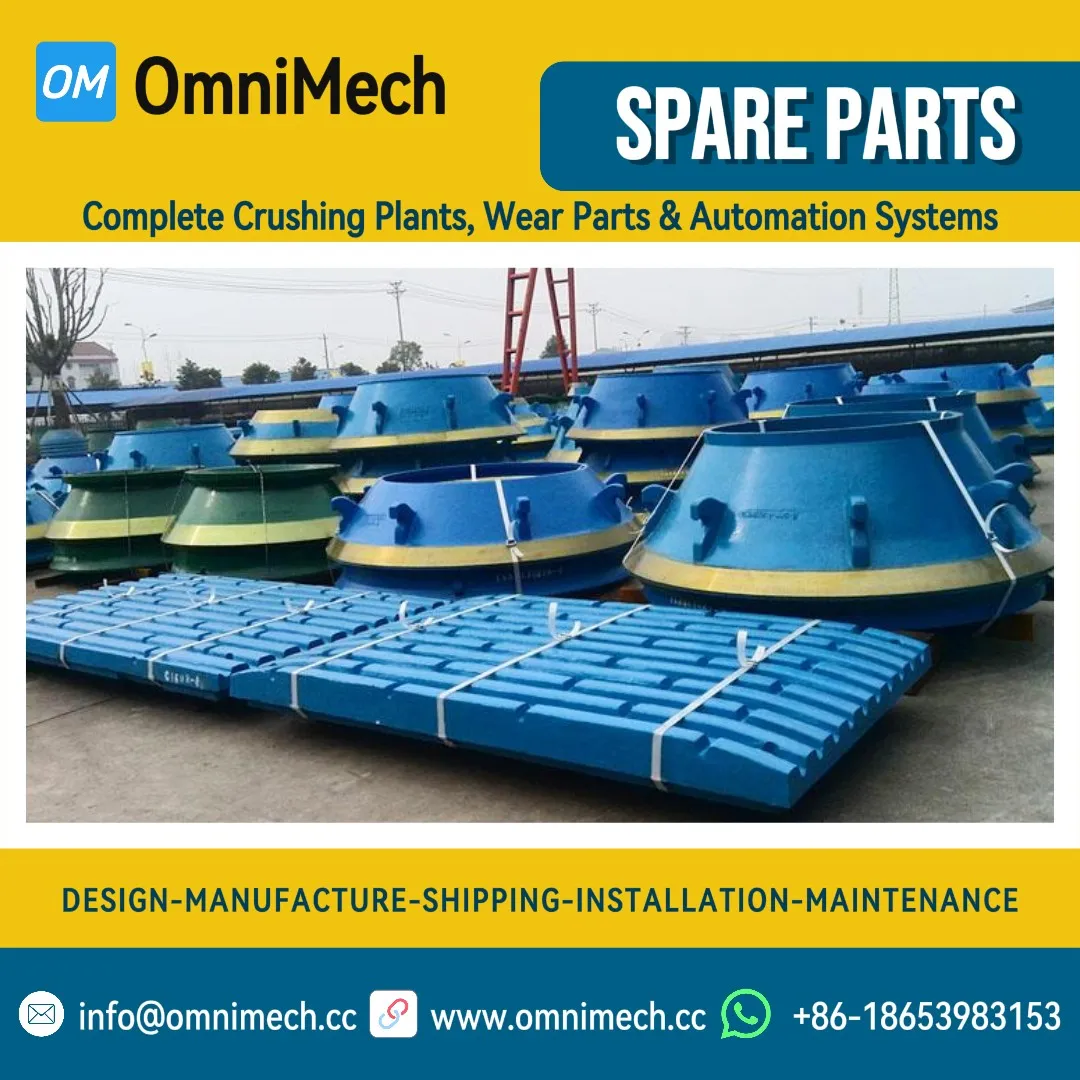
Wear parts represent 30–50% of a crushing plant’s operating cost. New materials and manufacturing methods are extending part life and reducing costs.
Next-Generation Alloys
- High-chromium white iron with carbide reinforcement: Achieves 2–3x the wear life of traditional high-manganese steel in high-impact applications
- Ceramic-insert wear parts: Tungsten carbide or ceramic tiles embedded in steel matrix provide exceptional abrasion resistance for cone crusher concaves and impact crusher blow bars
- Composite materials: Multi-layer designs with a tough backing layer and ultra-hard working surface optimize both impact resistance and abrasion resistance
3D Printing (Additive Manufacturing)
While not yet suitable for large crusher liners, 3D printing is making inroads for:
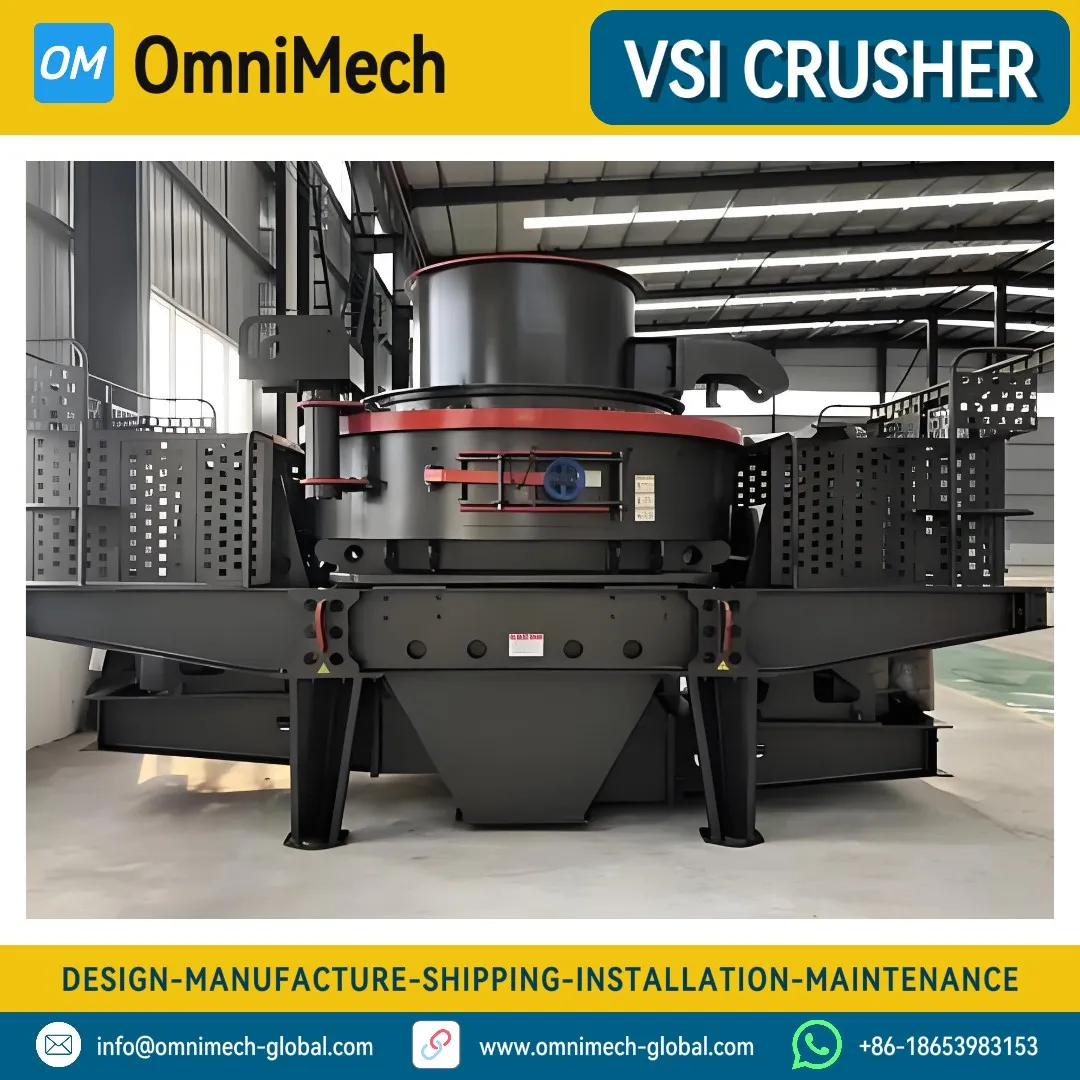
- Small wear components: Impeller bars for VSI crushers, screen panel inserts, and feed distribution plates
- Repair and refurbishment: Laser cladding and wire-arc additive manufacturing can rebuild worn crusher components to original specifications at 40–60% of new part cost
- Prototype tooling: Rapid iteration of new liner profiles to optimize crushing performance for specific applications
5. Automation and Autonomous Crushing
Full automation of crushing operations is progressing through several stages.
Level 1: Single-Loop Control
Already standard in modern plants—automatic controls maintain:
- Crusher CSS at target setting
- Feed rate based on crusher motor power draw
- Lubrication temperature via automatic cooling systems
Level 2: Coordinated Control
Emerging in new installations—plant-wide optimization:
- Automatic start/stop sequences with interlocking safety
- Closed-circuit screen-crusher coordination to maximize throughput
- Automatic response to common upset conditions (tramp iron, bridging, overload)
Level 3: Autonomous Operation
Being piloted at several sites—minimal human intervention:
- Self-adjusting crusher settings based on product quality feedback from online analyzers
- Automatic wear part condition monitoring with maintenance scheduling
- Autonomous material routing based on real-time inventory levels and customer orders
Safety Benefits of Automation
Automation significantly improves safety by removing operators from hazardous areas:
- Eliminates the need for personnel to enter crusher chambers for inspection
- Reduces exposure to dust, noise, and vibration
- Automated lockout/tagout systems prevent accidental startup during maintenance
What This Means for Your Operation
These technology trends are not future possibilities—they are being deployed today. Here’s how to prepare:
- Start with data collection: You can’t optimize what you don’t measure. Install sensors and establish baseline operating data before investing in AI or advanced analytics.
- Evaluate electrification: If your operation has access to grid power, the ROI for converting from diesel to electric drives is typically 2–3 years.
- Upgrade wear parts strategically: Test advanced alloy or ceramic-insert wear parts on your highest-cost wear items first—typically cone crusher concaves and impact crusher blow bars.
- Invest in operator training: Technology is only as effective as the people operating it. Ensure your team understands both the capabilities and limitations of new systems.
- Plan for integration: Choose equipment and software platforms with open communication protocols (OPC-UA, MQTT) to ensure future interoperability.
Conclusion
The crushing industry is entering a period of rapid technological advancement. Operations that embrace AI-driven optimization, electrification, and advanced materials will achieve significant cost advantages—while those that delay adoption risk falling behind competitors who are already deploying these technologies.
At OmniMech, we’re at the forefront of these developments, offering electric-driven crushers with VFD control, IoT-ready monitoring systems, and advanced wear parts using the latest alloy technologies. Contact us to learn how we can help modernize your crushing operation.